
Start with your material. End with a way to study it.
Choose a workflow for the PDF, lecture, recording, video, photo, or note in front of you. Every tool keeps the source connected to the active-recall practice that comes next.
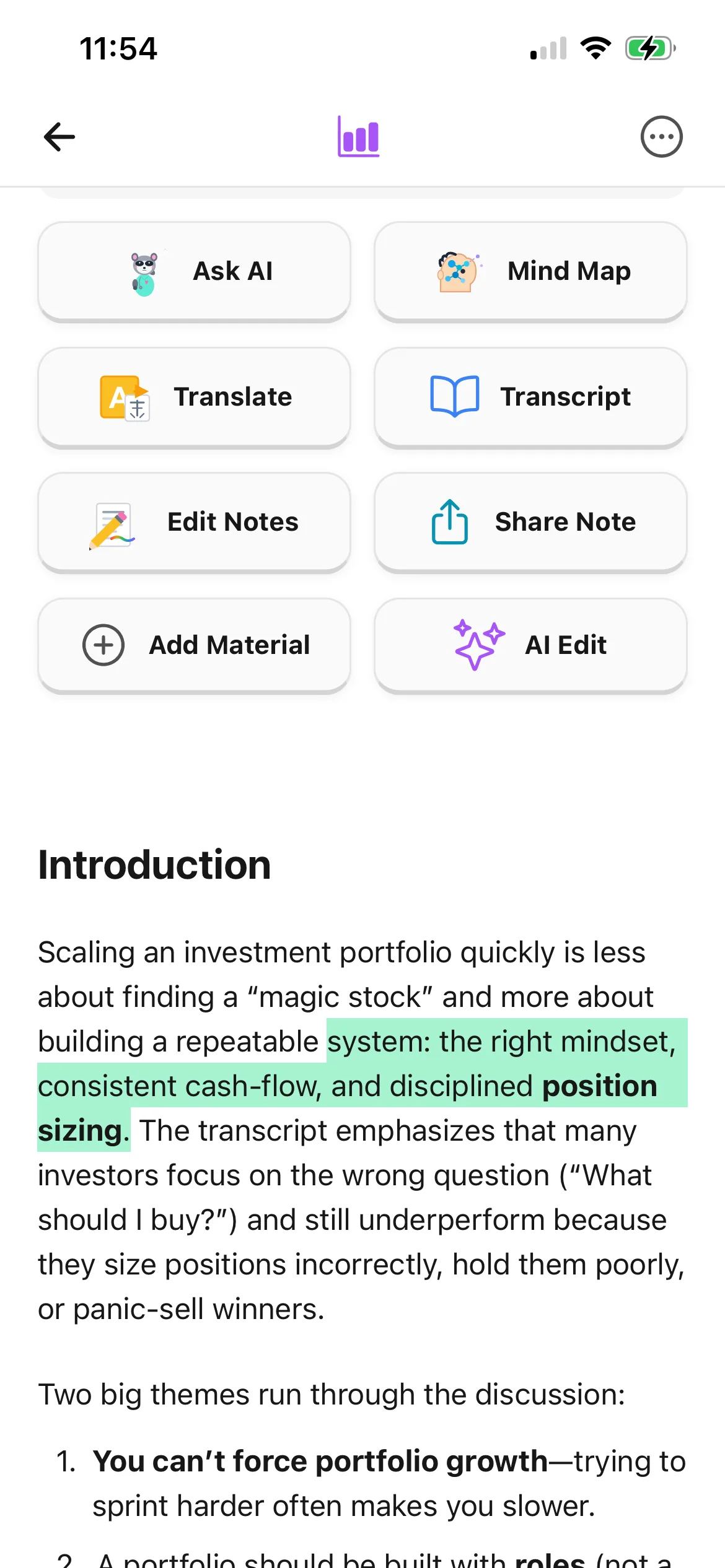
Choose your starting point
Focused tools for real study workflows
These are not isolated generators. Each workflow creates a note that stays connected to its source and the different ways you can understand and remember it.
Turn any PDF into flashcards you can actually study
Import your lecture slides, textbook chapter, or reading. BrainDen organizes the material into a connected note, then helps you review the important ideas as question-and-answer flashcards instead of rereading the entire file.
Explore this workflowTurn a long PDF into structured study notes
Stop switching between an isolated summary and the file it came from. BrainDen turns your PDF into an organized note while keeping the source available for highlighting, comments, verification, and deeper study.
Explore this workflowTurn your PDF into a practice quiz
A file can feel familiar after several readings without being retrievable in an exam. Import your PDF into BrainDen, organize the material, and use practice questions to find what you know and what still needs attention.
Explore this workflowTurn a YouTube video into notes you can study
Educational videos are useful, but scrubbing through the same timeline is a slow revision method. Paste a YouTube link into BrainDen to create a structured note, then turn the ideas into active study instead of another passive rewatch.
Explore this workflowTurn a lecture recording into notes while you focus on class
Capture the lecture, keep a visible recording indicator on screen, and let BrainDen transform the session into a structured note. You can retain the transcript for study and choose whether the original recording should remain after processing.
Explore this workflowTurn an audio recording into organized study notes
Upload a recording you are permitted to use and transform spoken explanations into a transcript and structured note. BrainDen keeps the material together so you can clarify details and continue studying without replaying every minute.
Explore this workflowTurn handwritten notes into flashcards without retyping them
Photograph the notes you already made, turn them into an editable digital note, and practise the key ideas as flashcards. Your handwriting remains the source while BrainDen gives it a searchable, reusable study structure.
Explore this workflowTurn your study notes into a connected mind map
A linear note is useful for detail, but some topics make more sense as a network. BrainDen turns the concepts in your note into a visual map so you can inspect hierarchy, follow relationships, and decide what needs deeper explanation.
Explore this workflowOrganize college notes by semester, course, and module
A useful college note system should still make sense in exam week, when every course contains lectures, readings, assignments, and revision material. Build a simple semester-to-course hierarchy in BrainDen, file each note at the level where you will look for it, and connect ideas that cross those folder boundaries.
Explore this workflowLink lecture notes to readings without duplicating your work
Lecture notes often explain what matters for the course, while readings supply evidence, definitions, and detail. Keep each note intact in BrainDen, add a link where one source clarifies or challenges the other, and use backlinks to return to that relationship from either direction during revision.
Explore this workflowReview multiple notes together without losing the originals
An exam topic may span lectures, readings, tutorials, and worked examples that live in separate notes. BrainDen lets you select the notes that answer one revision objective and read them continuously, while every original remains separate, editable, and connected to its source.
Explore this workflowExport multiple study notes as one PDF revision pack
When you need an offline revision pack, printable handout, or ordered topic document, selecting the right notes is more useful than exporting an entire library. BrainDen can read several selected notes together and export that selection as one PDF while the originals stay separate and editable.
Explore this workflowShare one study note or folder by read-only link
This BrainDen workflow is for a checked note or focused folder that is ready for classmates. Publish one note or the notes directly inside a folder as a read-only web link, choose whether the original source and transcript appear, inspect the recipient view, and disable public access when the study task ends.
Explore this workflowTurn lecture notes into flashcards for active review
Lecture notes capture the structure, examples, and emphasis of a specific class, which makes them a strong starting point for exam review. Add or paste the notes into BrainDen, check that the lecturer's terminology is represented accurately, and practise retrieving the ideas as flashcards instead of only rereading the page.
Explore this workflowTurn a YouTube video into flashcards you can review
A clear tutorial can make a difficult topic click, but another full rewatch is a slow way to test what you remember. Paste an educational YouTube link into BrainDen, review the structured note for visual details the spoken content may not capture, and practise the key ideas as flashcards connected to the rest of your course library.
Explore this workflowTurn your notes into a quiz that reveals study gaps
Notes become more useful when they make you retrieve an idea instead of simply recognize the page. Paste or open one coherent set of notes in BrainDen, correct the important details, and use the connected quiz to find the definitions, relationships, and applications that still need work.
Explore this workflowTurn PowerPoint slides into flashcards you can explain
Lecture slides often contain headings, diagrams, and abbreviated bullets rather than the full explanation you heard in class. Export the PowerPoint deck as a readable PDF, import it into BrainDen, add the missing lecture context, and practise the important ideas as focused flashcards.
Explore this workflowTurn a PDF into a mind map with meaningful links
A useful mind map does more than place keywords around a central bubble. Import a focused PDF into BrainDen, review the structured note, and use the mind map to inspect hierarchy and relationships while the original pages remain available for evidence, notation, and exceptions.
Explore this workflowTurn a PowerPoint deck into a focused practice quiz
A slide deck can feel familiar because you have seen its layout many times, but recognition is not the same as being able to answer a question. Export the PowerPoint as a readable PDF, import it into BrainDen, complete the missing lecture context, and test the concepts without looking at the slides.
Explore this workflowTurn a textbook chapter into notes you can study
A useful textbook note is not a shorter copy of every paragraph. Start with a chapter or section you are permitted to upload, preview its headings and learning questions, import the PDF into BrainDen, and edit the structured note around what your course expects you to understand and use.
Explore this workflowTurn a YouTube video into a quiz you can learn from
A tutorial can feel clear while it is playing because the explanation and visuals are still in front of you. Paste an accessible educational YouTube link into BrainDen, review the structured note for details the spoken content may not capture, and take a quiz without replaying the answer first.
Explore this workflowTurn a study image into an editable, connected note
A photo can preserve a whiteboard, handout, or notebook page, but it is difficult to search and easy to forget in a camera roll. Capture a clear image in BrainDen, review the extracted text, restore any layout or diagram meaning, and file the editable note with the course material it belongs to.
Explore this workflowTurn PowerPoint slides into notes you can actually study
PowerPoint slides often preserve headings, diagrams, and short prompts while leaving the lecturer's explanation out. Export the deck as a readable PDF, import it into BrainDen, and edit the structured note so visual details, speaker context, and course connections remain useful after the presentation ends.
Explore this workflowMake flashcards from notes without losing the explanation
Good notes hold definitions, explanations, examples, and relationships, while a useful flashcard asks for one answer you can judge. Paste or open a coherent note in BrainDen, correct the important details, and use the connected flashcard view to practise recall without cutting the cards off from their original context.
Explore this workflowTurn a study image into flashcards you can trust
A photo preserves the page, but it does not automatically preserve the meaning of handwriting, arrows, columns, diagrams, or equations. Capture a clear image in BrainDen, correct the editable note against the source, and only then use the connected flashcard view to practise the ideas that the page was meant to teach.
Explore this workflowTurn a study image into a quiz you can learn from
A photographed whiteboard, handout, or notebook page can become useful practice only after its text and visual meaning are checked. Capture the image in BrainDen, correct the editable note against labels, arrows, equations, and layout, then take a quiz that points each mistake back to the source you inspected.
Explore this workflowTurn your notes into a focused, active study guide
A useful study guide is not every note copied into one longer document. Choose one exam objective, identify the smallest set of lectures, readings, and worked examples that explain it, then use BrainDen to create a clear guide note, connect the originals, and move from continuous review into retrieval practice.
Explore this workflowTurn an audio file into flashcards you can verify
An hour of audio is difficult to scan when you only need the definition, relationship, or example behind one question. Upload a focused lecture, tutorial, or voice recording to BrainDen, review the transcript and structured note, then use flashcards for retrieval practice while the fuller explanation stays close.
Explore this workflowTurn a YouTube study video into a useful mind map
A video timeline hides how ideas introduced at different moments belong together. Paste an educational YouTube link into BrainDen, review the structured note, and open its mind map to inspect the hierarchy, contrasts, and causal links. Return to the video whenever a diagram or demonstration carries meaning the transcript cannot preserve.
Explore this workflowOrganize digital notes so your study library stays useful
Digital notes become another pile when every capture lands in one list or every idea gets its own complicated category. In BrainDen, use nested folders for stable course and topic structure, links for relationships that cross those folders, and a short maintenance routine that keeps mixed PDFs, recordings, images, videos, and text easy to retrieve.
Explore this workflowOrganize research notes without losing the source trail
Research notes need two forms of order at once: each claim must remain traceable to its source, while ideas from different readings must become comparable by theme. Use BrainDen folders for the project and its source notes, links for arguments and methods that cross papers, and selected multi-note review when you need to synthesize a focused question.
Explore this workflowMake revision notes that lead to active recall
Revision notes should reduce the amount you need to navigate without deleting the reasoning, evidence, and exceptions an exam may test. In BrainDen, choose one objective, review the relevant notes together, create a concise checked note with links to the originals, then use its headings, flashcards, quizzes, and Explain It Back prompts for retrieval.
Explore this workflowTurn a textbook chapter into focused flashcards
A whole textbook contains more detail than one useful flashcard set can carry. Import a focused chapter or permitted PDF section into BrainDen, review the structured note against headings, figures, definitions, and worked examples, then create recall prompts that test the chapter's decisions and relationships without severing them from the source.
Explore this workflowTurn study text into a mind map you can explain
A paragraph can contain a definition, sequence, contrast, and exception without showing how they fit together. Paste or type one focused explanation into BrainDen, check the structured note, and open its mind map to separate the central idea from supporting branches while the complete wording remains available.
Explore this workflowTurn a study image into a mind map you can verify
A photographed page may use arrows, columns, colour, spacing, and diagrams to show meaning that extracted text cannot preserve by itself. Capture a clear image in BrainDen, correct the editable note against the source, and open its mind map only after labels and relationships accurately reflect the page.
Explore this workflowTurn lecture notes into a quiz that tests class content
Lecture notes preserve the examples, terminology, and emphasis of a particular class, but rereading them does not show what you can retrieve. Paste or open one lecture note in BrainDen, complete missing visual context, and take a connected quiz that turns each wrong answer into a precise route back to the class material.
Explore this workflowBuild a history mind map that explains connections
A useful history mind map should show why developments connect, not place names and dates around a decorative centre. Choose one period, event, debate, or essay question, create checked notes in BrainDen, and map chronology, causation, evidence, continuity, and change while every source remains available for context.
Explore this workflowBuild a biology mind map that preserves how systems work
Biology becomes difficult when a list of terms hides the levels and processes that connect them. Choose one system, pathway, structure, or learning objective, create checked notes in BrainDen, and build a mind map that separates components, sequence, regulation, evidence, and exceptions while diagrams stay attached.
Explore this workflowBuild a chemistry mind map without losing exact notation
Chemistry connects particle models, observable changes, equations, conditions, and quantitative relationships, but a decorative map can blur those levels. Choose one topic, create checked notes in BrainDen, and map how concepts relate while formulas, units, structures, and worked calculations stay in the attached source.
Explore this workflowCreate a chemistry quiz from the material you need to learn
A useful chemistry quiz should test the models, notation, calculations, and reasoning used in your course, not just produce random element trivia. Import or paste one focused topic into BrainDen, verify every equation and unit, and use the connected quiz to locate the exact concept or worked step that needs repair.
Explore this workflowTurn study text into flashcards without losing the explanation
Pasted text can contain several definitions, relationships, examples, and exceptions inside one paragraph. Add one focused passage to BrainDen, check the structured note for missing context, and use its flashcards to test one decision at a time while the fuller explanation remains connected.
Explore this workflowTurn study text into a quiz that reveals what needs work
A passage can feel familiar after several readings even when you cannot use its ideas without looking. Paste or type one focused section into BrainDen, correct the structured note, and take a connected quiz that helps you locate the exact definition, relationship, or application that still needs attention.
Explore this workflowTurn a study recording into a quiz you can verify
A recording is hard to review when the explanation you need is buried inside a long timeline. Upload a permitted lecture, tutorial, or spoken study summary to BrainDen, check the transcript and structured note, then use its connected quiz to test the ideas without replaying every minute.
Explore this workflowTurn a study recording into a mind map you can explain
Spoken explanations unfold in time, which makes their hierarchy difficult to see during revision. Upload a permitted lecture, tutorial, or spoken summary to BrainDen, check the transcript and structured note, and open its mind map to organize the central idea, major relationships, examples, and conditions.
Explore this workflowTurn PowerPoint slides into a mind map you can verify
A slide deck can scatter one topic across headings, diagrams, builds, and abbreviated bullets. Export the PowerPoint as a readable PDF, import it into BrainDen, complete the structured note with permitted lecture context, and open its mind map only after the hierarchy and relationships match the course material.
Explore this workflowTurn a textbook chapter into a focused practice quiz
A whole textbook contains more detail than one useful quiz can test. Import a permitted chapter or focused PDF section into BrainDen, review the structured note against headings, figures, definitions, and worked examples, then use a connected quiz to find which concepts and applications need another pass.
Explore this workflowTurn a textbook chapter into a mind map you can verify
A textbook chapter spreads its argument across headings, definitions, figures, examples, and qualifications. Import one permitted chapter or focused PDF section into BrainDen, check the structured note against the source, and open its mind map to show the central idea and relationships without discarding the detailed evidence.
Explore this workflowTurn a research paper into notes that preserve the evidence
A useful research note should show what the authors asked, how they investigated it, what they found, and where their interpretation stops. Import one permitted paper PDF into BrainDen, check the structured note section by section, and keep figures, page details, your comments, and related readings connected instead of reducing the paper to an isolated summary.
Explore this workflowTurn a research paper into flashcards without flattening its claims
Research papers contain more than terms to memorize. A useful card set should test why a study was run, how its evidence was produced, what the result supports, and which limitation changes the interpretation. Import one permitted paper PDF into BrainDen, verify the structured note, and use connected flashcards while the fuller method, figures, and discussion remain available.
Explore this workflowTurn a research paper into a quiz that tests interpretation
Recognizing a paper's abstract is not the same as being able to explain its design or judge what the evidence supports. Import one permitted research paper PDF into BrainDen, correct the structured note, and use a connected quiz to test the research question, method, results, interpretation, and limitations while every correction remains traceable to the source.
Explore this workflowCreate biology flashcards from the material in your course
Biology flashcards are useful when they preserve how a term, structure, pathway, or experiment fits into a living system. Bring one focused set of checked lecture notes, textbook pages, diagrams, or lab explanations into BrainDen, verify the scientific detail, and create cards that ask you to retrieve relationships and mechanisms rather than recognize isolated vocabulary.
Explore this workflowCreate a biology quiz from the material you need to learn
A biology quiz should reveal whether you can explain a process, interpret evidence, and apply a relationship, not only identify familiar vocabulary. Import or paste one checked topic into BrainDen, preserve its diagrams and source context, and use practice questions to locate whether the real gap is terminology, sequence, regulation, comparison, or experimental reasoning.
Explore this workflowCreate chemistry flashcards without losing exact notation
Chemistry flashcards must preserve the symbols, conditions, units, particle models, and relationships that make an answer true. Bring one checked lecture, chapter, reaction family, or calculation method into BrainDen, keep the source attached, and create prompts that connect observations, models, equations, and quantitative reasoning instead of memorizing unverified fragments.
Explore this workflowCreate history flashcards that connect evidence and change
History flashcards become weak when every prompt reduces a complex development to a date or a famous name. Bring one defined period, event, debate, or essay theme into BrainDen, check the lecture and reading notes against their sources, and create cards that connect chronology, causation, consequence, evidence, perspective, continuity, and change.
Explore this workflowCreate a history quiz that tests more than dates
A useful history quiz checks whether you can place evidence in context, connect cause and consequence, compare developments, and evaluate interpretation, not simply recognize a famous date. Bring one bounded topic or essay theme into BrainDen, verify the notes and sources, and use each question to expose the specific factual or reasoning gap that needs repair.
Explore this workflowCreate anatomy flashcards that keep structures in context
Anatomy requires exact names and spatial relationships, so a text-only card can become misleading when it loses orientation, layer, side, attachment, innervation, or blood supply. Bring one region or body system into BrainDen, verify the note against your permitted atlas and course diagrams, and create cards that keep each structure connected to location, relation, function, and relevant context.
Explore this workflowCreate an anatomy quiz from your checked course material
An anatomy quiz should reveal whether you can identify a structure, place it relative to its neighbours, and connect it to function or supply. Bring one region, system, or practical objective into BrainDen, verify the note against your permitted diagrams and atlas material, and use questions to diagnose whether the gap is terminology, orientation, relation, pathway, or application.
Explore this workflowCreate physics flashcards that support problem solving
Physics flashcards are most useful when they retrieve the meaning, conditions, units, and relationships behind an equation rather than asking you to copy a formula. Bring one bounded topic into BrainDen, verify notation and diagrams against your course material, and build prompts that help you decide which principle applies before returning to full worked problems.
Explore this workflowCreate a physics quiz that tests reasoning and calculations
A useful physics quiz checks whether you can choose a model, interpret a diagram, apply a sign convention, and justify a result, not merely recognize an equation. Bring one topic and its checked examples into BrainDen, review every generated numerical detail, and use each miss to distinguish a conceptual, diagram, algebra, unit, or calculation error.
Explore this workflowCreate math flashcards that support real problem solving
Mathematics flashcards work best for definitions, theorem conditions, representations, counterexamples, and the first decision in a method. They should not compress a multi-step proof or problem into a pattern to memorize. Bring one topic into BrainDen, verify every symbol and condition, and connect short recall prompts to complete examples and independent exercises.
Explore this workflowCreate a math quiz that diagnoses problem-solving gaps
A useful mathematics quiz should reveal whether the gap lies in a definition, representation, method choice, algebraic step, or interpretation. Bring one bounded topic and its checked examples into BrainDen, verify every generated expression and answer independently, and use feedback to repair the specific step before solving a fresh problem without options.
Explore this workflowCreate psychology flashcards that preserve evidence and nuance
Psychology courses combine technical vocabulary, competing theories, research methods, findings, and limitations. A weak deck turns all of that into detached definitions. Bring one course unit into BrainDen, check claims against assigned sources, and create focused cards that distinguish a concept from its evidence, a study result from its interpretation, and an association from a causal conclusion.
Explore this workflowCreate a psychology quiz from your checked course notes
A useful psychology quiz asks you to distinguish similar concepts, apply a theory to a new scenario, interpret a design, and judge what evidence can support. Bring one bounded unit into BrainDen, verify the notes and named studies, and use each question to identify whether the gap lies in terminology, application, method, result, or claim strength.
Explore this workflowCreate a geography quiz that connects place and process
Geography is more than recalling capitals. A useful course quiz connects location with physical or human processes, scale, map interpretation, data, and case-study evidence. Bring one region or topic into BrainDen, verify facts against dated sources and original maps, and use each question to diagnose whether the gap is place knowledge, process, representation, comparison, or evaluation.
Explore this workflowCreate geography flashcards that connect place and process
Geography flashcards should connect a place with the process, scale, evidence, and date that make it meaningful. A card about a capital, river, population, or landform loses value when it removes the map or source context. Bring one region or course topic into BrainDen, verify changing facts and spatial representations, and build prompts that lead back to maps, datasets, and full geographic explanations.
Explore this workflowCreate economics flashcards that preserve model assumptions
Economics flashcards work best when they connect a definition or model with its assumptions, graph, mechanism, evidence, and limitation. Memorizing a curve label or policy slogan without those links can produce weak analysis. Bring one microeconomics or macroeconomics unit into BrainDen, verify notation and dated data, and create prompts that support diagram work, causal explanation, calculation, and evaluation.
Explore this workflowCreate an economics quiz that tests analysis and evidence
A useful economics quiz tests whether you can select a model, interpret a graph, trace a mechanism, calculate a value, and evaluate a conclusion. It should not reward isolated terms alone. Bring one bounded unit into BrainDen, verify every graph and calculation, and use each miss to identify a definition, assumption, diagram, causal, numerical, evidence, or evaluation gap.
Explore this workflowCreate computer science flashcards that support code reasoning
Computer science flashcards can strengthen recall of concepts, invariants, complexity, syntax rules, and design trade-offs. They cannot replace tracing or writing code. Bring one bounded course topic into BrainDen, verify language versions and code behavior in the required environment, and create prompts that lead from a short answer into execution traces, proofs, tests, and independent implementation.
Explore this workflowCreate a computer science quiz that tests technical reasoning
A useful computer science quiz tests concepts, state changes, algorithm choices, code traces, complexity, and design trade-offs. It should expose reasoning gaps rather than reward recognition of syntax. Bring one bounded topic into BrainDen, verify code in the required environment, and use each miss to identify a conceptual, tracing, implementation, testing, complexity, or design error.
Explore this workflowCreate law flashcards that preserve authority and jurisdiction
Law flashcards should keep a rule connected to its jurisdiction, authority, elements, exceptions, procedural setting, and course date. A short case slogan can hide the facts and reasoning that limit a holding. Bring one bounded module into BrainDen, verify every legal statement against assigned current sources, and build prompts for study only. Do not use generated material as legal advice.
Explore this workflowCreate a law quiz that tests issue spotting and application
A useful law quiz tests issue spotting, authority, rule elements, exceptions, analogies, distinctions, and application to new facts. It should keep the jurisdiction and course cutoff date visible. Bring one bounded module into BrainDen, verify every case and legal statement, and use each miss to locate an issue, authority, rule, factual, application, or conclusion gap. This workflow does not provide legal advice.
Explore this workflowCreate sociology flashcards that connect theory and evidence
Sociology flashcards should connect a concept with its theorist, assumptions, social context, supporting evidence, criticism, and application. A card that stores only a short definition can hide important differences between perspectives. Bring one bounded topic into BrainDen, verify every study and quotation against your assigned sources, and create prompts that support comparison, research-method analysis, and reasoned evaluation.
Explore this workflowCreate a sociology quiz that tests evidence and evaluation
A useful sociology quiz tests whether you can distinguish perspectives, interpret studies, assess research methods, apply concepts, and evaluate explanations. It should not reward recognition of theorist names alone. Bring one bounded topic into BrainDen, verify each source detail, and use every miss to locate a conceptual, theoretical, empirical, methodological, contextual, or evaluative gap.
Explore this workflowCreate political science flashcards with institutional context
Political science flashcards should connect a concept with its institutional setting, level of government, theoretical assumptions, case evidence, and time period. Memorizing a constitutional term or policy label without those boundaries can create false generalizations. Bring one bounded course unit into BrainDen, verify current facts and assigned sources, and create prompts for comparison, causal reasoning, institutional analysis, and evidence-based evaluation.
Explore this workflowCreate a political science quiz that tests comparison
A useful political science quiz tests concepts, institutional rules, theoretical mechanisms, case comparison, evidence interpretation, and qualified evaluation. It should keep each country and time period visible. Bring one bounded course unit into BrainDen, verify current institutional facts and sources, and use every miss to locate a conceptual, theoretical, institutional, causal, empirical, comparative, or evaluative gap.
Explore this workflowCreate philosophy flashcards that preserve whole arguments
Philosophy flashcards should preserve the difference between a claim, premise, inference, objection, reply, and conclusion. A short slogan linked to a thinker can distort the argument and hide important qualifications. Bring one bounded text or topic into BrainDen, verify wording against the assigned edition, and create prompts that support argument reconstruction, conceptual distinction, objection, reply, and independent evaluation.
Explore this workflowCreate a philosophy quiz that tests argument structure
A useful philosophy quiz tests conceptual distinctions, argument reconstruction, inference, thought experiments, objections, replies, and evaluation. It should not reward recognition of quotations or thinker names alone. Bring one bounded text or problem into BrainDen, verify every source passage, and use each miss to locate a conceptual, interpretive, premise, inference, counterexample, objection, or evaluation gap.
Explore this workflowCreate nursing flashcards that preserve clinical context
Nursing flashcards must connect a finding or intervention with its patient context, rationale, priority, and safety limits. A short card can become unsafe when it removes the population, setting, unit, route, timing, contraindication, or local policy. Bring one course objective into BrainDen, verify every clinical statement against current approved sources, and create prompts for classroom study. Use the result to practise recall, not to direct patient care.
Explore this workflowCreate a nursing quiz that tests safe reasoning
A useful nursing quiz tests whether you can interpret a defined patient context, identify relevant findings, select a course-supported priority, and explain the rationale. It should not turn incomplete details into a universal clinical rule. Bring one bounded objective into BrainDen, verify every question against current approved sources, and use each miss to find a knowledge, assessment, priority, intervention, rationale, calculation, or safety gap. Keep generated practice separate from patient care.
Explore this workflowCreate pharmacology flashcards with complete drug context
Pharmacology flashcards can hide important limits when they separate a drug name from its class, mechanism, indication, route, patient factors, interactions, monitoring, or source date. Bring one drug class or course objective into BrainDen, verify every detail against current approved references, and create prompts that connect mechanism with intended and adverse effects. Use the deck for education only. Do not use generated material to prescribe, dispense, administer, or change medication.
Explore this workflowCreate a pharmacology quiz that tests drug relationships
A useful pharmacology quiz tests whether you can connect a drug class and mechanism with intended effects, adverse effects, interactions, precautions, and monitoring. It must keep route, population, indication, unit, and source date clear. Bring one bounded course objective into BrainDen, verify every question against current approved references, and use each miss to find a naming, mechanism, application, interaction, safety, monitoring, or calculation gap. Never use generated questions for medication decisions.
Explore this workflowCreate medical flashcards that preserve clinical reasoning
Medical flashcards must connect a fact with the mechanism, patient context, evidence, uncertainty, and course level that make it useful. Isolated symptom, test, or treatment cards can hide important alternatives and safety limits. Bring one bounded learning objective into BrainDen, verify every statement against current approved sources, and create prompts for educational recall. Use generated material to study course reasoning, not to diagnose, treat, or advise a patient.
Explore this workflowCreate a medical quiz that tests course reasoning
A useful medical quiz tests whether you can connect mechanisms with findings, interpret information within stated limits, compare explanations, and justify a course answer. It should not turn an incomplete vignette into patient advice. Bring one bounded learning objective into BrainDen, verify every question against current approved sources, and use each miss to find a mechanism, pattern, investigation, interpretation, differential, evidence, or safety gap. Keep generated practice separate from diagnosis and treatment.
Explore this workflowYour first study system can start with one file.
Create your first BrainDen note for free, then choose the way you want to understand and remember it.