
Test the text instead of rereading it
Use questions to retrieve and apply the main ideas before opening the note, rather than treating recognition of familiar wording as evidence of recall.
A passage can feel familiar after several readings even when you cannot use its ideas without looking. Paste or type one focused section into BrainDen, correct the structured note, and take a connected quiz that helps you locate the exact definition, relationship, or application that still needs attention.
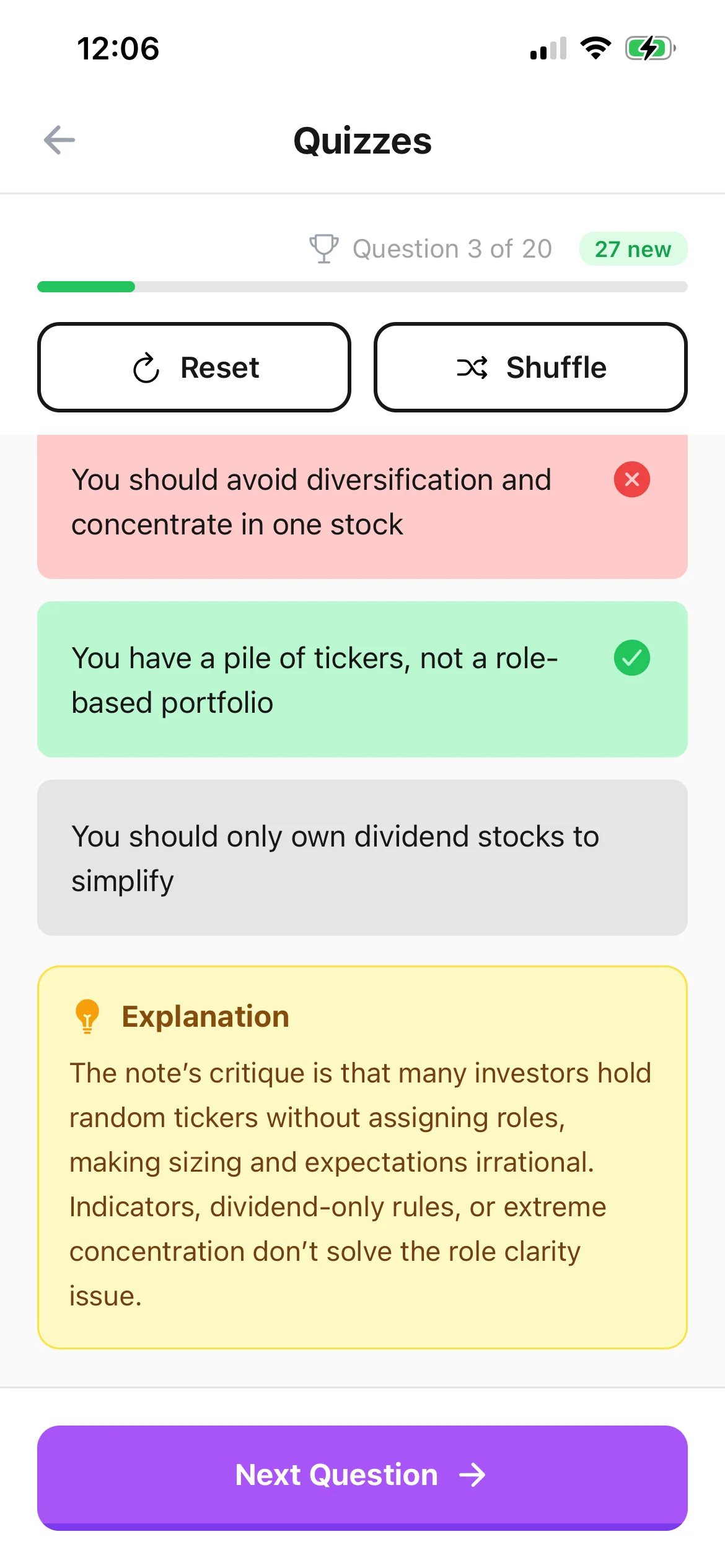
Use questions to retrieve and apply the main ideas before opening the note, rather than treating recognition of familiar wording as evidence of recall.
A missed answer can reveal a weak definition, confused comparison, broken sequence, or missing condition that deserves a targeted return to the passage.
Follow the quiz back to the editable note, then link that note to the lecture or reading that supplies fuller evidence and course context.
Workflow fit
From source to active study
Choose text with a clear learning objective. Remove navigation, references, and unrelated material that do not belong in the same practice session.
Check names, definitions, order, examples, and qualifications. Add missing context so the quiz begins from a note you are willing to study.
Answer without viewing the passage, read the feedback, explain the correction in your own words, and retry a related question after some time has passed.
A concrete example
A checked seminar outline covering informed consent, confidentiality, deception, debriefing, withdrawal, and a case where the principles create competing obligations.
A useful result could include
Generated material is a study aid. Review important terminology, notation, and claims against your source.
Make the result better
BrainDen removes repetitive setup work. Your judgement, course context, and retrieval practice are what turn the result into learning.
An initial attempt can guide the next reading. Use the errors to identify the passages that deserve close attention instead of rereading every line equally.
Do not stop at recognizing the correct option. State why another plausible answer does not fit the definition, evidence, sequence, or condition in the text.
After mastering one passage, review it beside connected lectures and readings so you can distinguish similar ideas across the wider topic.
Questions and answers
Yes. Add the text, review the structured note, and open its connected quiz view. Check important terminology and context before relying on the questions.
Use one coherent section with clear concepts, processes, comparisons, or examples. Unrelated passages create a less useful diagnostic quiz.
For a new topic, inspect and correct the note first. During revision, an early quiz can show which parts need focused rereading.
Yes. The BrainDen note remains connected to its quiz, flashcards, mind map, and Explain It Back practice, so you do not need to paste the material again.
Continue in your connected library
A growing study library should match the way your course is actually structured. Build folders inside folders so lectures, readings, assignments, and revision topics stay easy to find.
Explore this featureConnect related ideasFolders tell you where a note belongs. Links show how its ideas relate to the rest of what you know. Connect a concept to another lecture, reading, or course and use backlinks to find the relationship from either side.
Explore this featureReview the whole topicExam topics rarely fit inside one note. Select the lectures, readings, and explanations that belong together, then review them in one continuous view without replacing or rewriting the originals.
Explore this featureKeep building your study system
Start with a focused passage, outline, or explanation you type or paste, create a connected note, and choose the study tools that help you understand and remember it.