Turn your material into a study system that sticks.
Practical, research-informed guides for recording lectures, organizing study notes, testing your memory, and preparing for exams.
Start here
Latest study guides

RemNote vs Knowt for Students: Which Fits Your Study Work?
Compare RemNote and Knowt for notes, flashcards, spaced review, course sources, group work, and current US prices. Test one unit before choosing.

RemNote vs StudyFetch for Students: Which Fits?
Compare RemNote and StudyFetch for course notes, source checks, flashcards, tutoring, organization, sharing, and current US prices. Test one real unit before choosing.

StudyFetch vs NotebookLM for Students: Which Fits?
Compare StudyFetch and Gemini Notebook for course sources, guided practice, source checks, sharing, and current US prices. Test one unit before choosing.

How to Take Physics Notes for Problem Solving
Make physics notes that help you choose a model, explain each equation, solve a new problem, and check whether the result makes physical sense.

How to Study for Oral Exams With Your Notes
Turn course notes into spoken practice for an oral exam. Build answer outlines, check sources, rehearse follow-up questions, and track gaps.

How to Review Lecture Notes After Class
Review lecture notes after class with a clear routine: check gaps against course sources, recall the main ideas, and choose what to practice next.

StudyFetch vs Coconote for Students: Which Fits?
Compare StudyFetch and Coconote for lecture notes, tutoring, recall practice, course organization, and verified US prices. Use one course unit to choose.
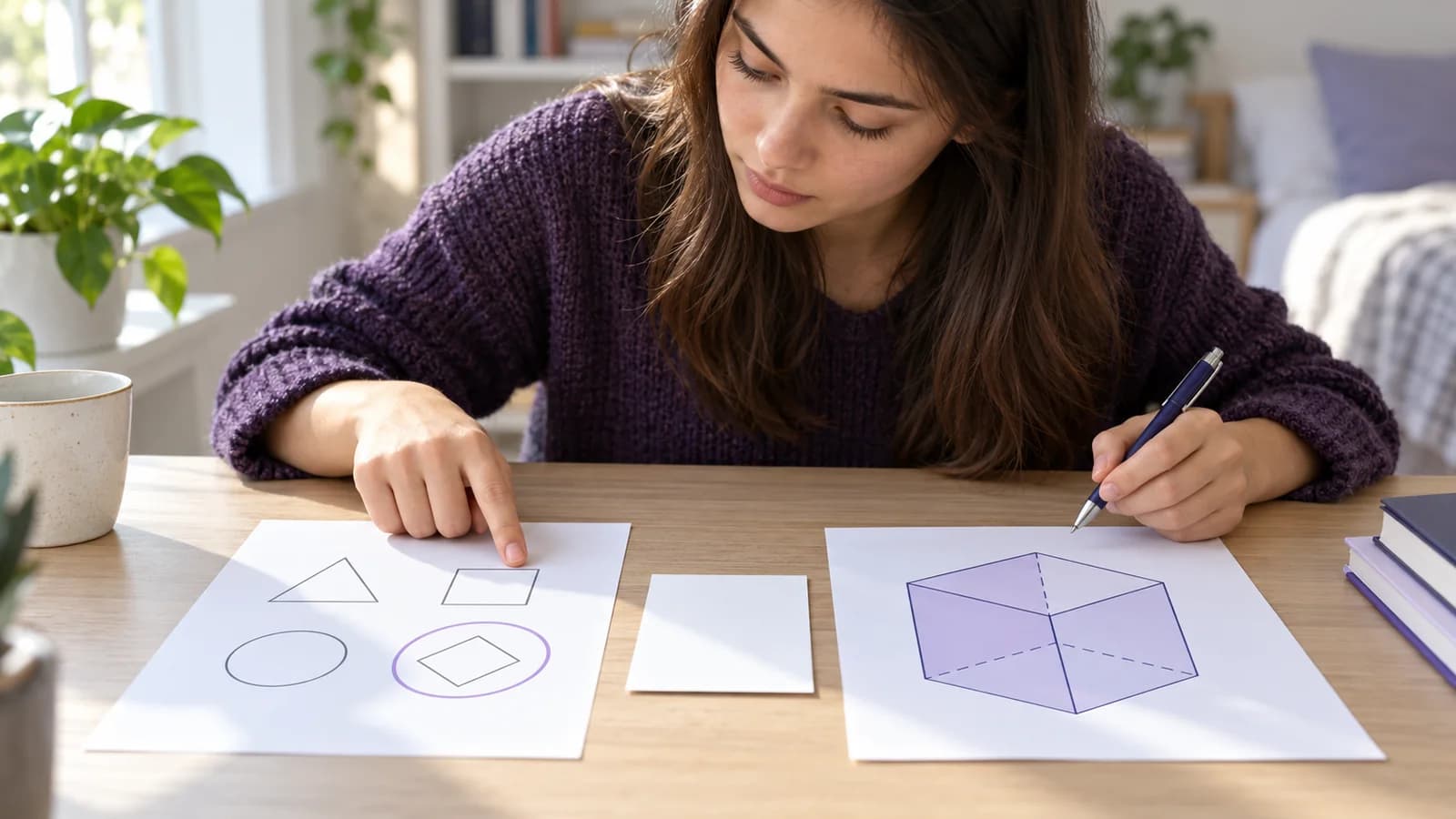
How to Make a Mistake Log for Studying
Turn missed practice questions into a short, source-checked mistake log. Use it to identify error patterns, choose the next study task, and test the fix.

How to Study for a Lab Practical Exam
Prepare for a lab practical by mapping assessed stations, checking lab records, practicing with real materials, and testing identification and procedures under exam conditions.
How to Study for Short Answer Exams With Notes
Turn course notes into short-answer practice questions, write responses from memory, and use a source-checked answer key to repair weak answers.
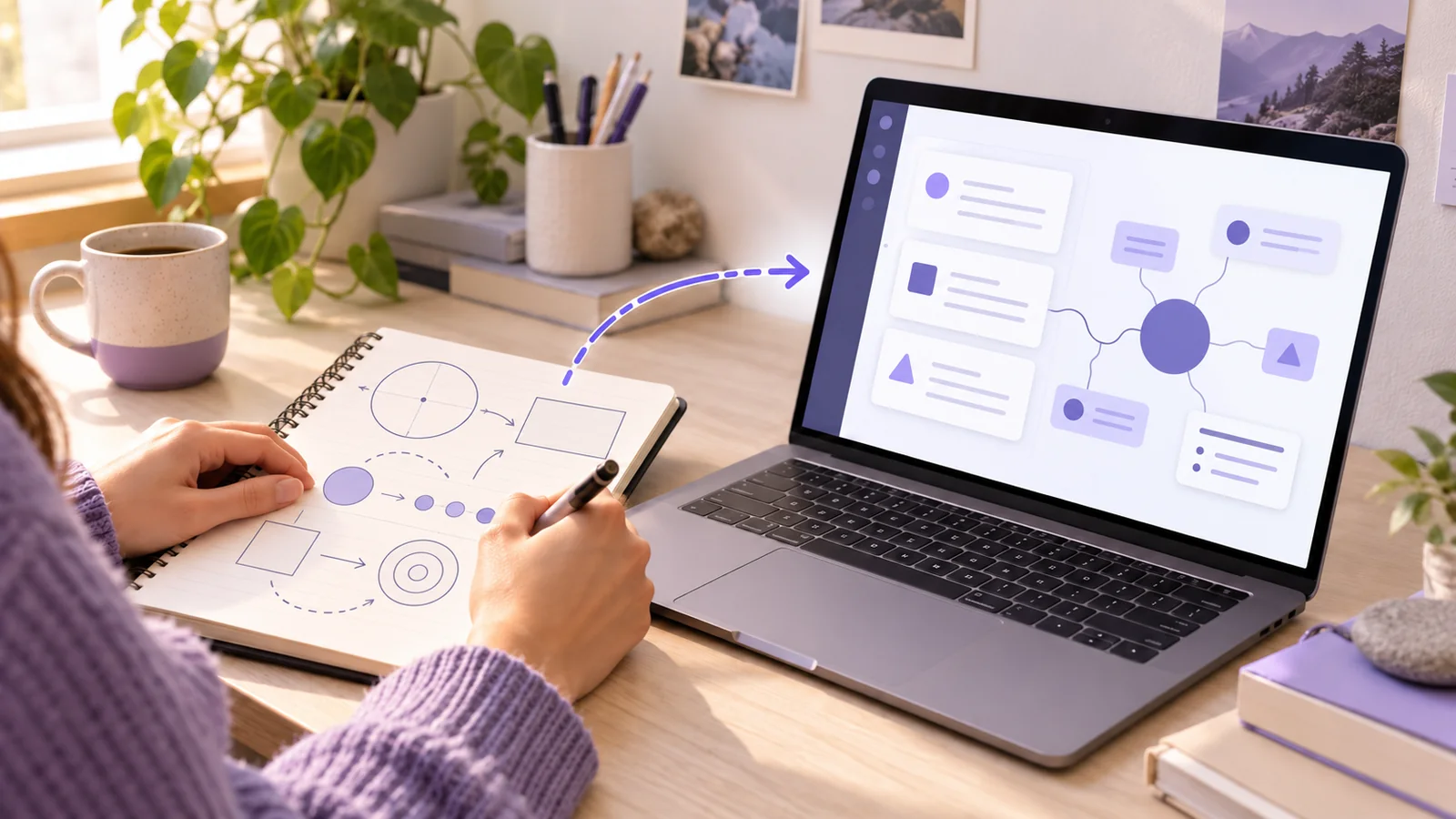
How to Combine Handwritten and Digital Notes for Studying
Keep paper notes and digital material in one usable study workflow. Capture each source, connect related ideas, and test what you can recall.
How to Study for Essay Exams With Notes
Turn lecture and reading notes into themes, evidence maps, and timed essay plans. Practise flexible answers, then check every claim against your course sources.
RemNote vs Coconote for Students: Which Fits Your Study Work?
Compare RemNote and Coconote for lecture capture, course notes, flashcards, review schedules, PDFs, and current costs, with a practical way to choose.
How to Use Learning Objectives to Study for Exams
Turn course learning objectives into specific questions, source-linked notes, and practice tasks. Check each skill before you decide what to review next.

How to Study Diagrams for Exams: A Practical Method
Learn to read, redraw, explain, and test diagrams for exams. Use a checked source, cover labels, trace arrows, and correct errors before the next review.

How to Take Chemistry Notes for Exams
Build chemistry notes around concepts, worked problems, and checks against your course sources. Use a simple template that turns each topic into exam practice.

Obsidian vs NotebookLM for Students: Which Fits Your Work?
Compare Obsidian and NotebookLM for course notes, source questions, revision, sharing, and cost. Use three student tasks to choose a workable study setup.

How to Organize Lecture Notes and Practice Problems
Connect each lecture concept to the problems that test it. Build a topic map, keep solutions traceable, and review mistakes without copying every note.
How to Organize Dissertation Notes Without Losing Sources
Build a dissertation note system that keeps sources, critical reading notes, chapter ideas, and writing decisions connected from research to final draft.
How to Create a Course Note Index That Works
Build a course note index that points from each syllabus topic to its lectures, readings, questions, and review notes without duplicating the original material.
How to Organize Law School Notes for Exams
Organize law school notes from case briefs and class discussion into a syllabus-based system that supports weekly outlining and exam practice.

RemNote vs Obsidian: Which Is Better for Students?
Compare RemNote and Obsidian for notes, backlinks, flashcards, PDFs, offline access, portability, pricing, and daily student workflows.

How to Take Anatomy Notes You Can Study From
Build anatomy notes around diagrams, structure relationships, and checked sources. Use a repeatable lecture-to-review workflow without copying every slide.
How to Study for a Cumulative Final Exam
Prepare for a cumulative exam by mapping every unit, testing older material, connecting topics, and using practice results to guide the final review.
How to Organize Notes for an Open-Book Exam
Build a fast open-book exam note system with a topic map, source index, concise summaries, and timed practice that exposes retrieval gaps.
How to Take Notes From a Podcast That You Can Use
Use a practical podcast note-taking workflow with timestamps, source checks, concise summaries, and recall questions that support later study.
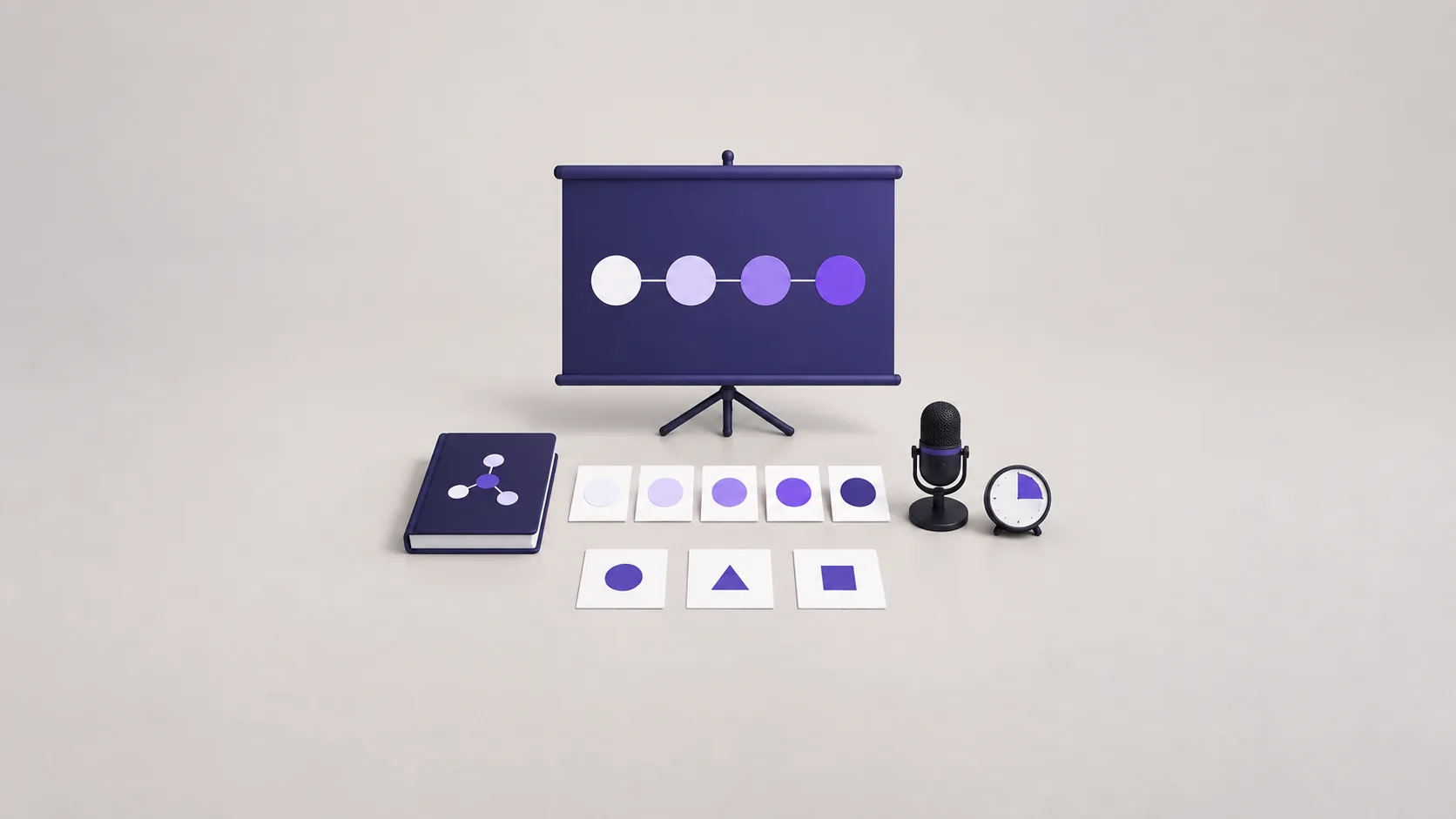
How to Study for a Presentation Without a Script
Prepare a class presentation by learning the message, rehearsing from a cue outline, checking your timing, and practising likely questions.
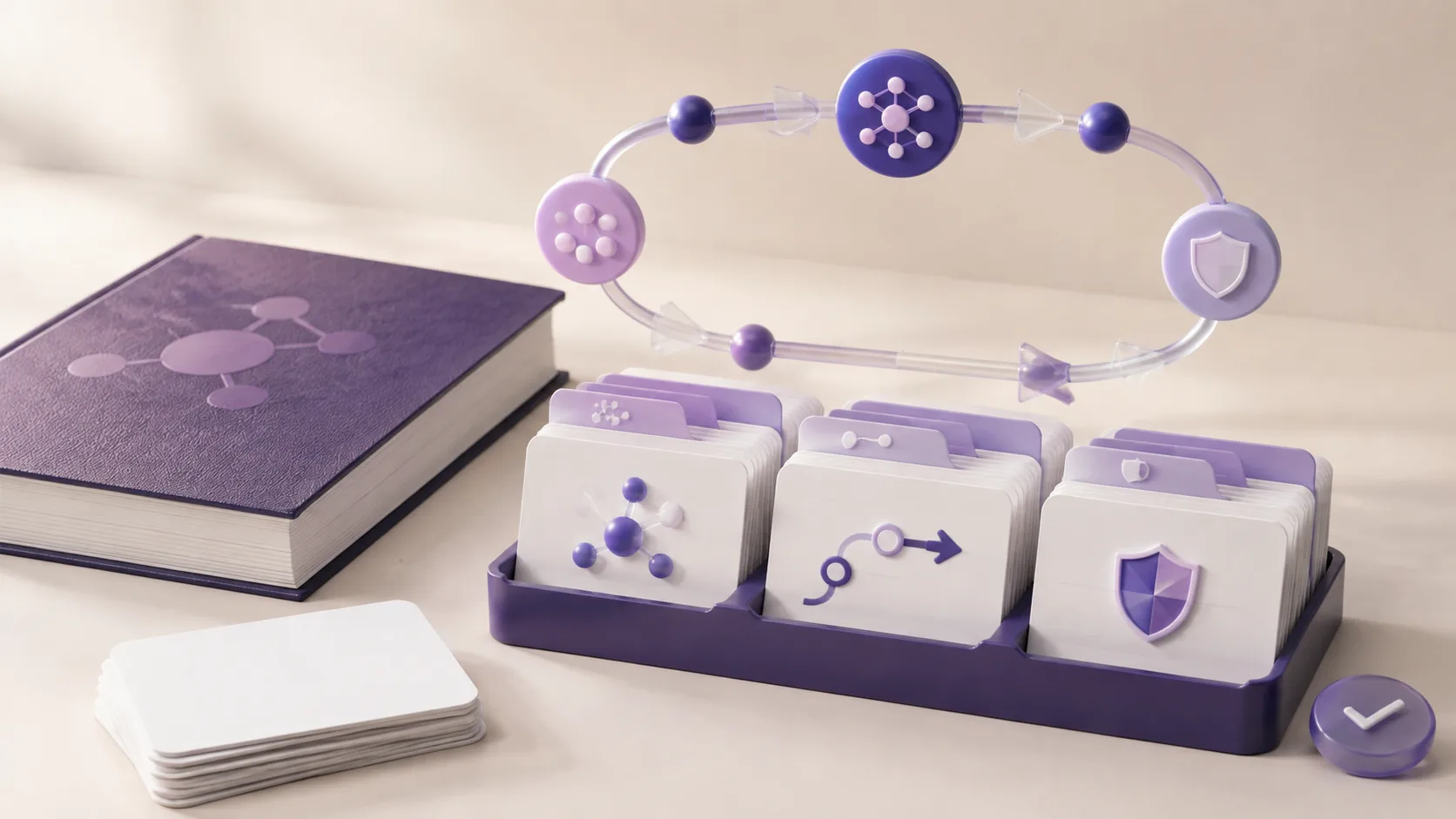
How to Make Flashcards for Pharmacology
Build pharmacology flashcards around drug classes, mechanisms, uses, risks, and comparisons, then verify every card against a current source.

5 Platforms for Shared Ebook Notes and Group Reading
Compare five platforms for shared ebook notes, group annotation, and study discussion, with clear limits, pricing, and best-fit recommendations.
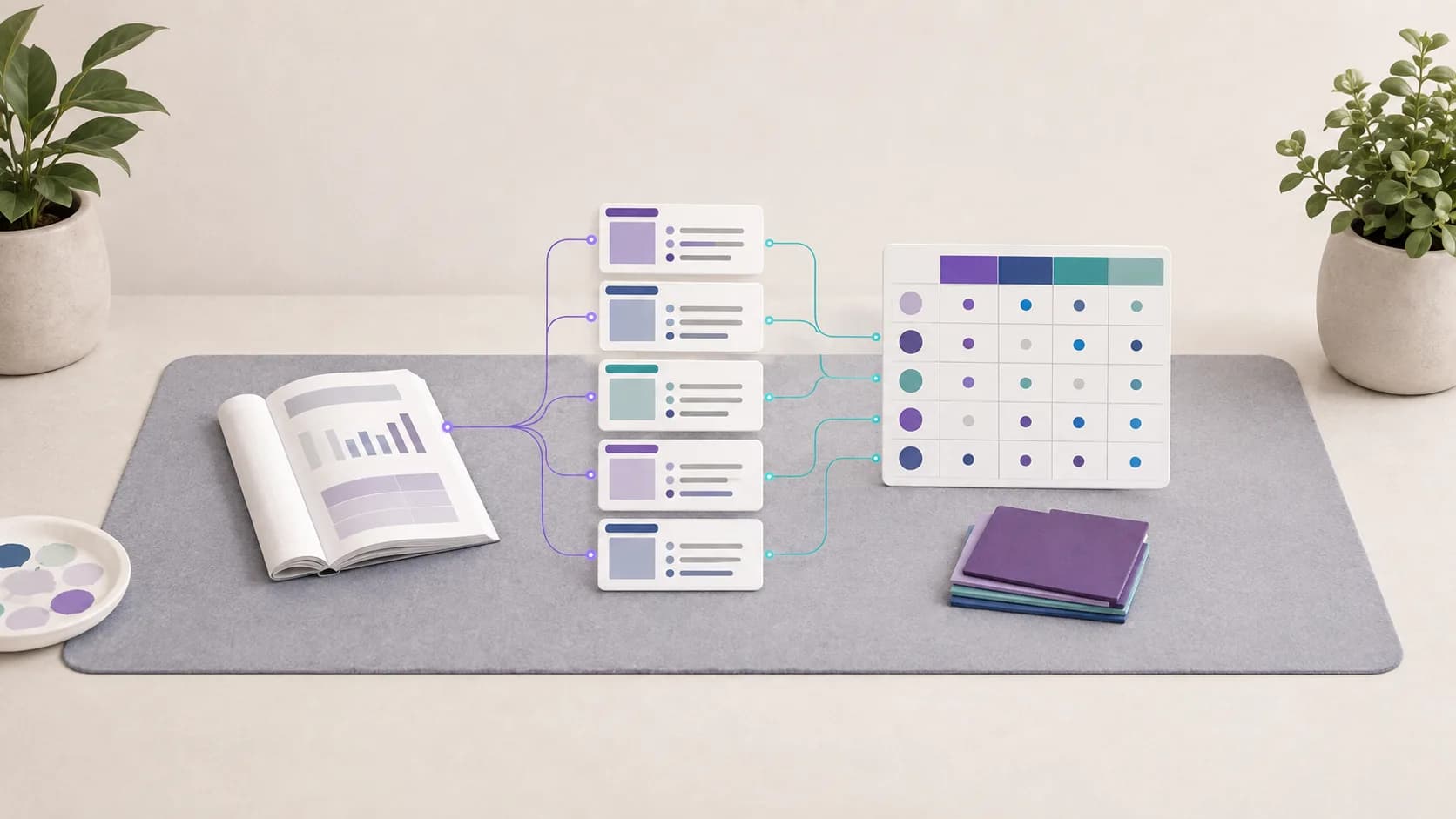
How to Organize Literature Review Notes
Organize literature review notes by source and theme, preserve citations, compare methods and findings, and turn reading notes into a clear synthesis.
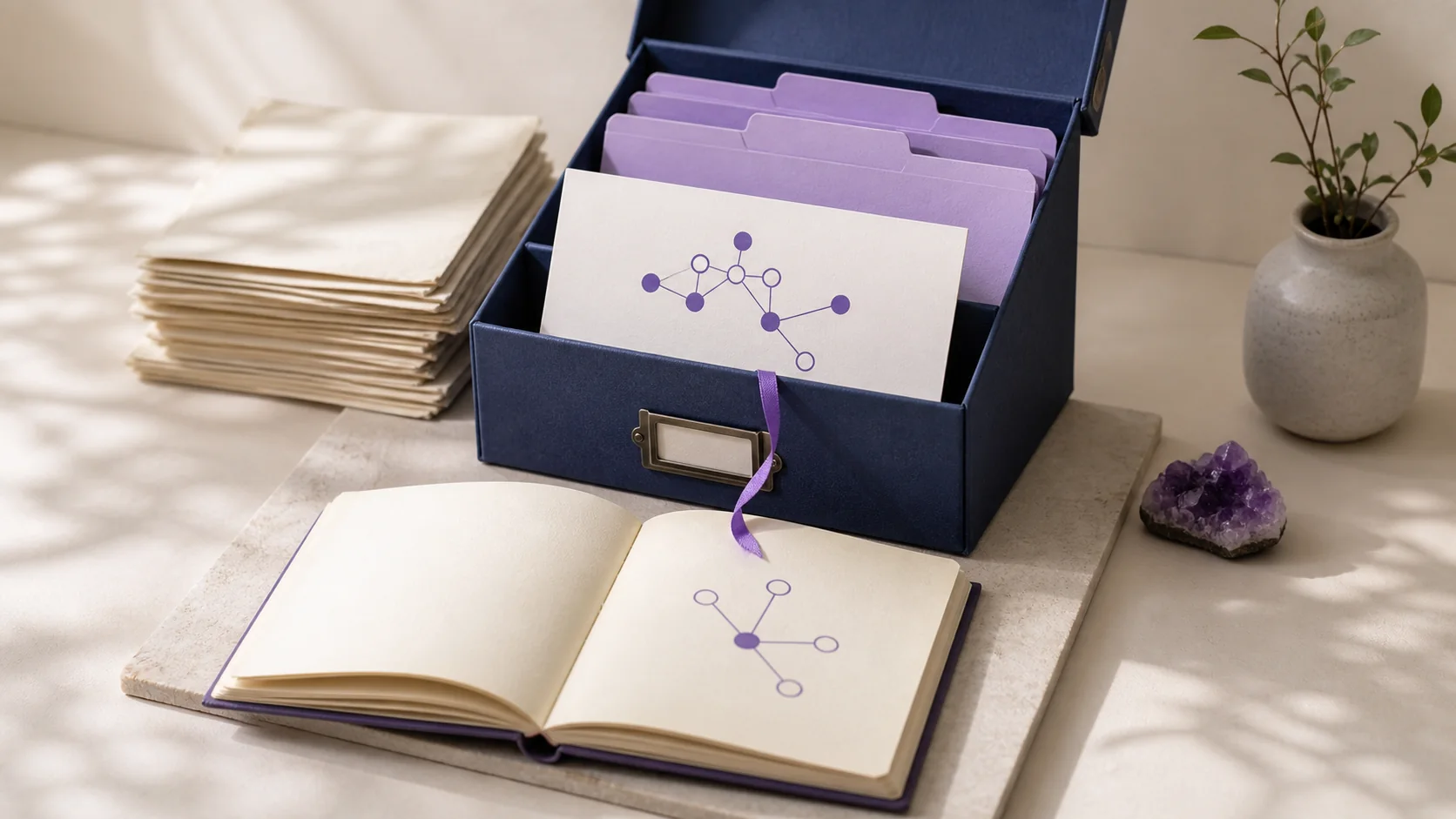
What to Do With Old College Notes After a Course
Decide which old college notes to keep, scan, archive, or recycle, then connect useful material to future courses without rebuilding your whole library.
5 Best Free Lecture Recording Apps for Students
Compare five free lecture recording apps by device support, transcription, note-taking, study tools, privacy controls, and current plan limits.

Coconote vs NotebookLM: Which Is Better for Studying?
Compare Coconote and NotebookLM for lecture capture, source-grounded research, study tools, mobile access, organization, and current pricing.
How to Study PowerPoint Slides Effectively
Study PowerPoint slides with a practical method that turns slide structure, diagrams, and lecture context into questions, recall, and checked review.
How to Make Biology Flashcards That Test Understanding
Learn how to make biology flashcards for terms, diagrams, processes, comparisons, and application questions without copying your notes.

How to Take Textbook Notes Without Copying Everything
Turn a textbook chapter into concise study notes by reading with questions, recalling each section, checking the source, and building review prompts.
How to Export Multiple Study Notes as One PDF
Export several study notes as one focused PDF by selecting one purpose, checking every source, ordering the notes, and testing the finished file.
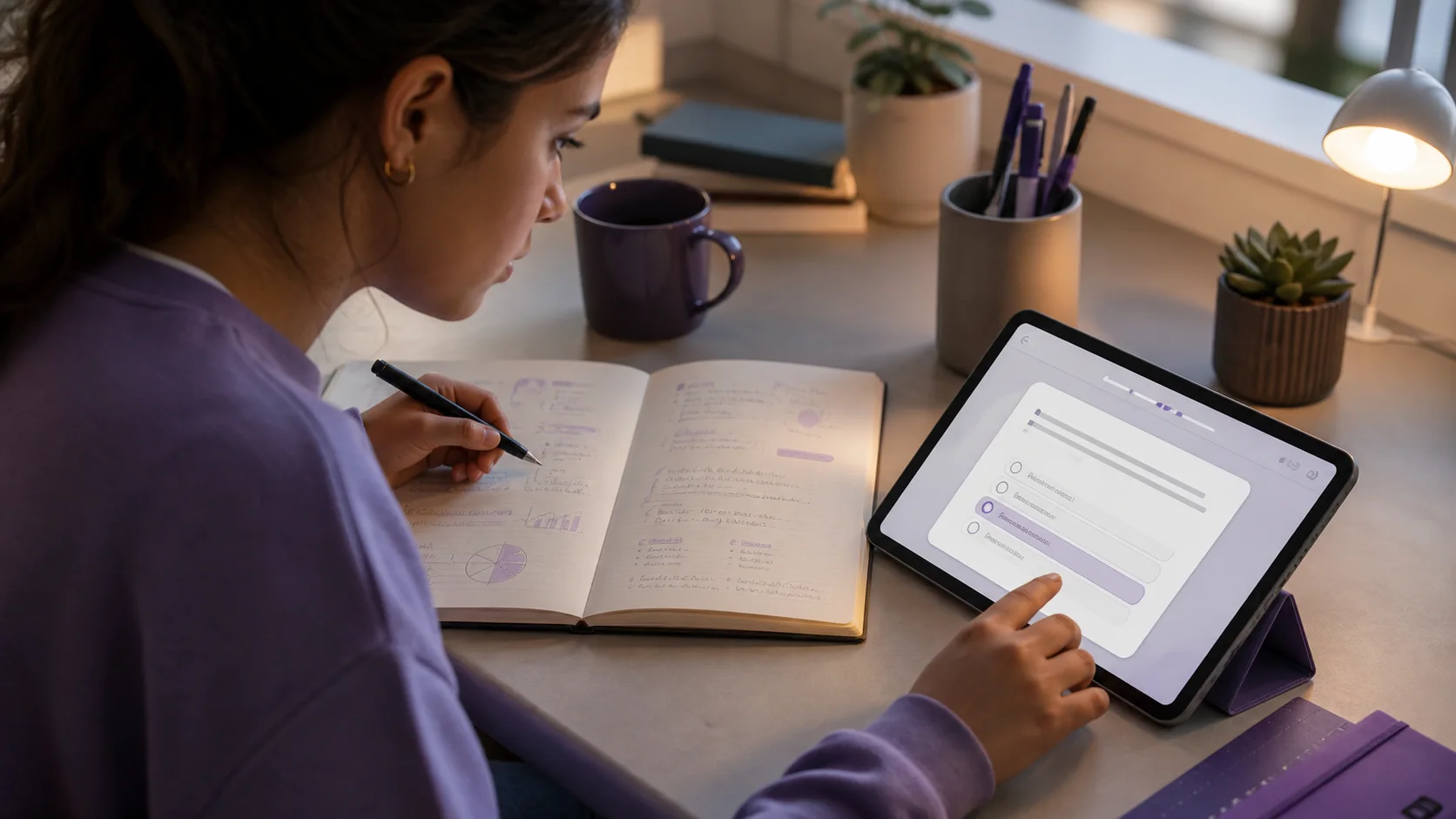
How to Make a Quiz From Study Notes
Turn checked study notes into a focused practice quiz, build a reliable answer key, and use each result to guide your next review.
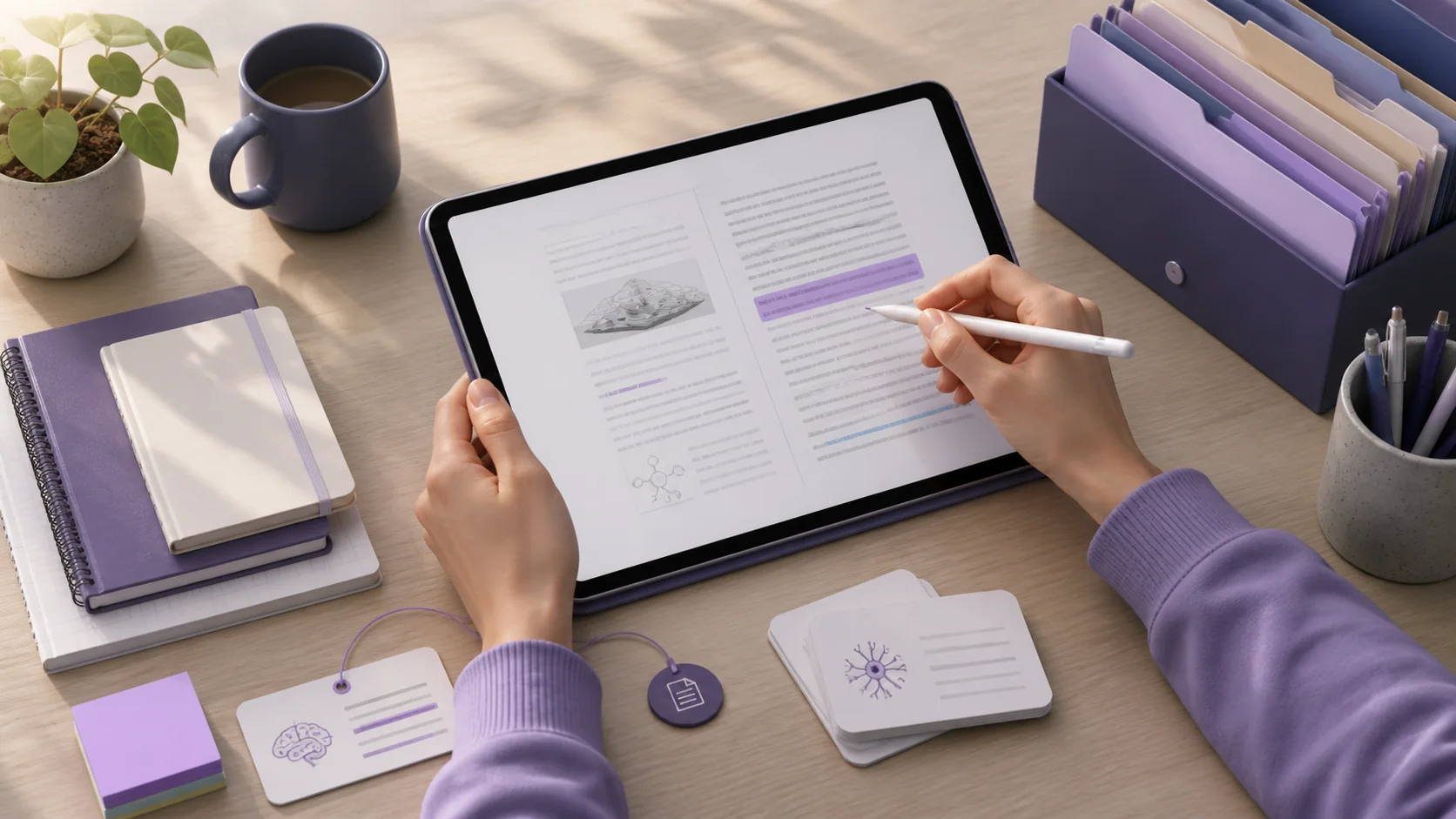
Best Apps for PDF Notes: 4 Tools Compared
Compare four study apps for PDF notes, including annotation, source-grounded questions, flashcards, organization, limitations, and current pricing.
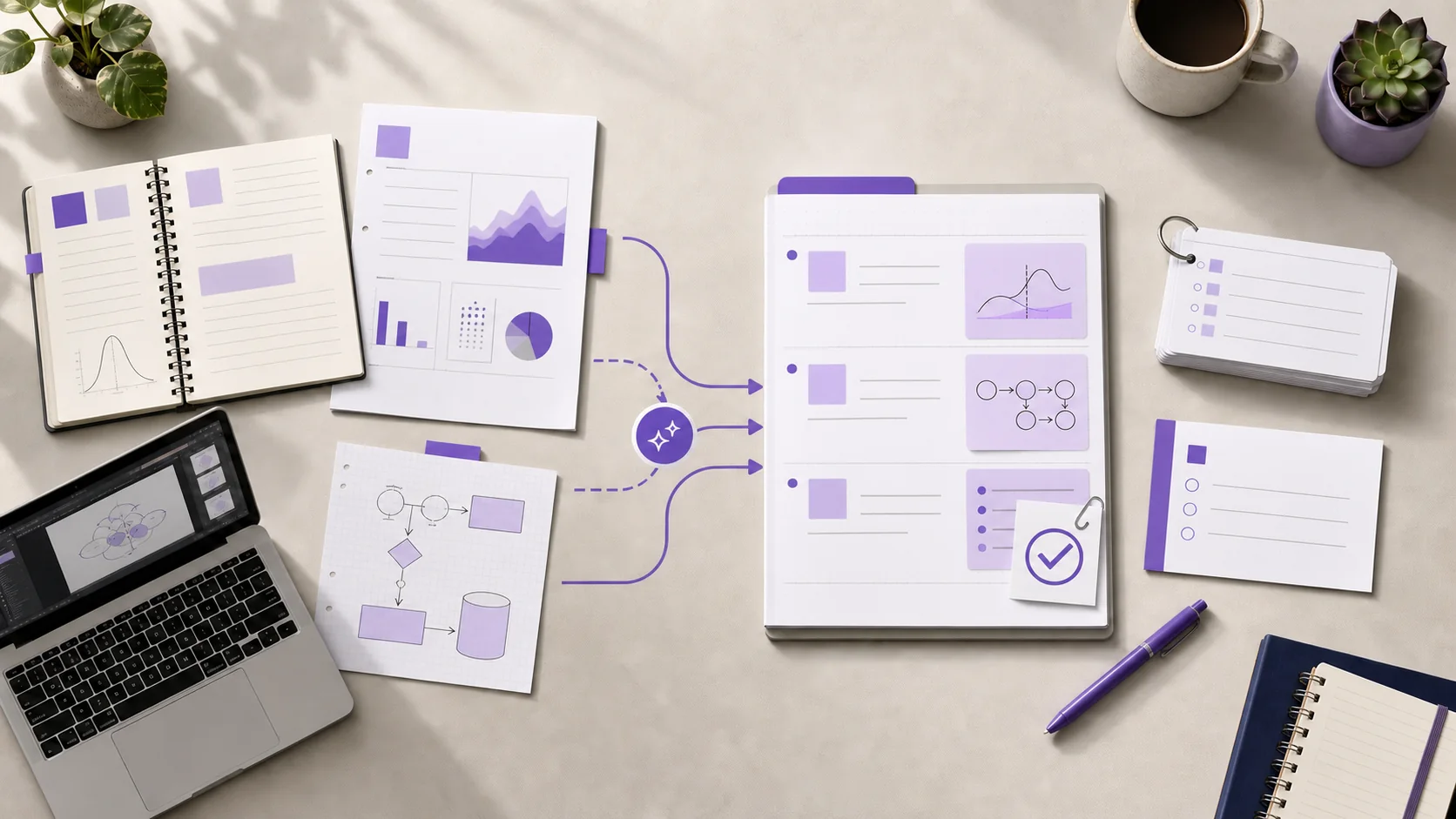
How to Use AI to Make Revision Notes You Can Trust
Use AI to draft revision notes from checked course material, verify every important detail, organize related sources, and turn the result into active recall.
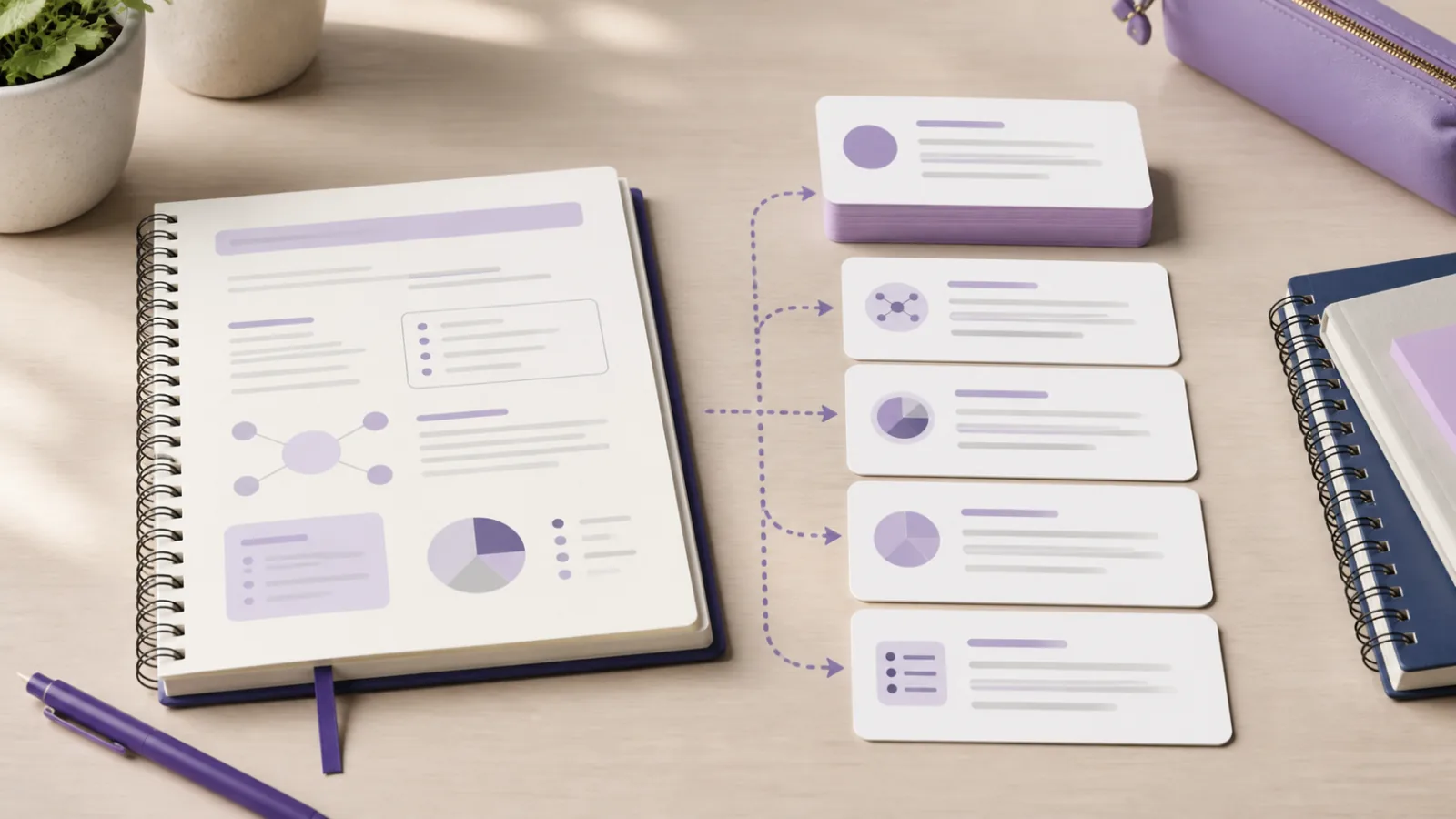
How to Create Flashcards From Lecture Notes
Turn one checked lecture note into focused flashcards with clear prompts, accurate answers, useful applications, and a review process you can repeat.

RemNote vs NotebookLM: Which Is Better for Studying?
Compare RemNote and NotebookLM for source research, note organization, flashcards, spaced repetition, mobile study, sharing, and current pricing.
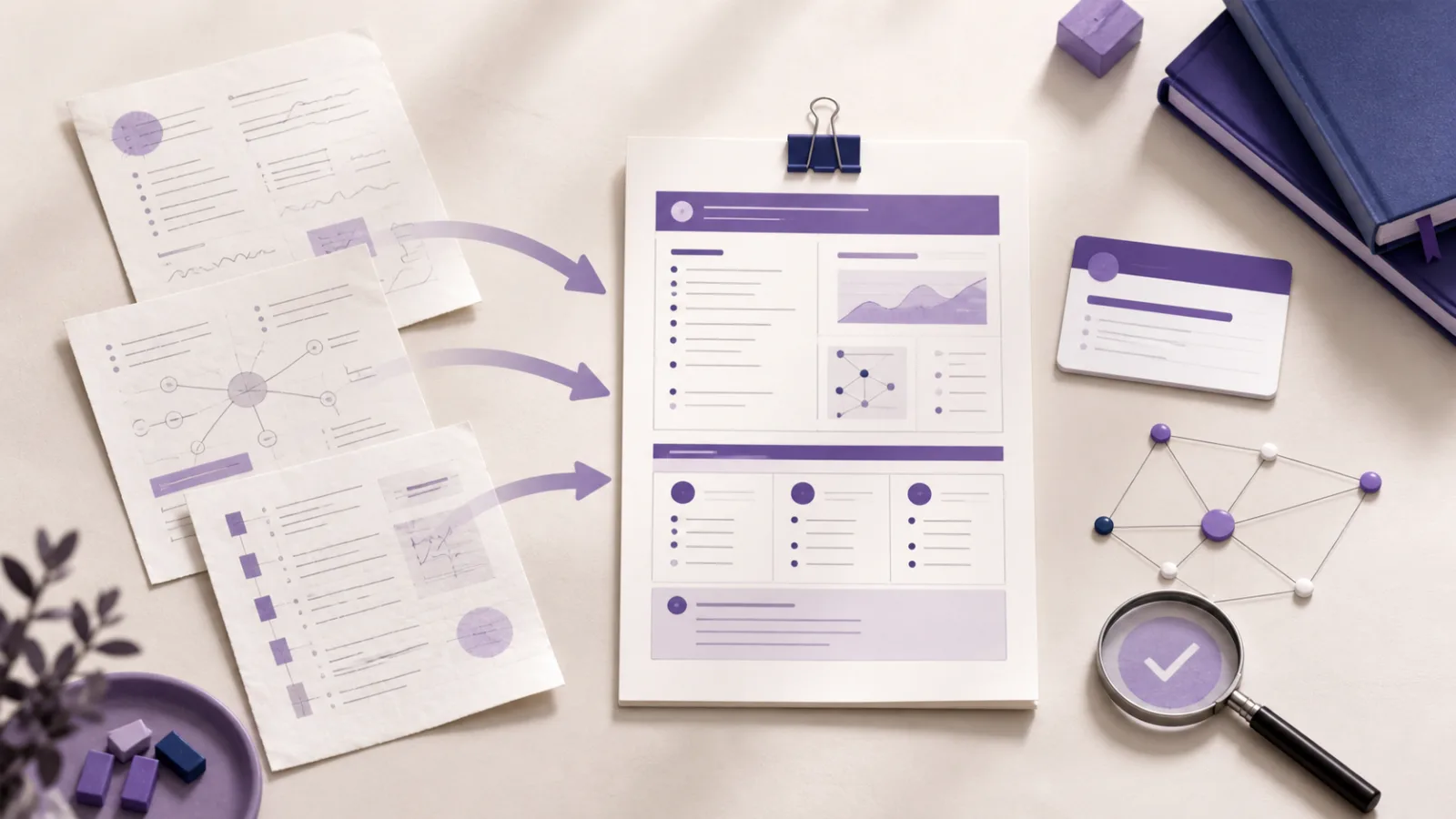
How to Create a Study Guide From Lecture Notes
Turn several lecture notes into a focused study guide with clear topics, source checks, worked examples, and active-recall questions for exam review.
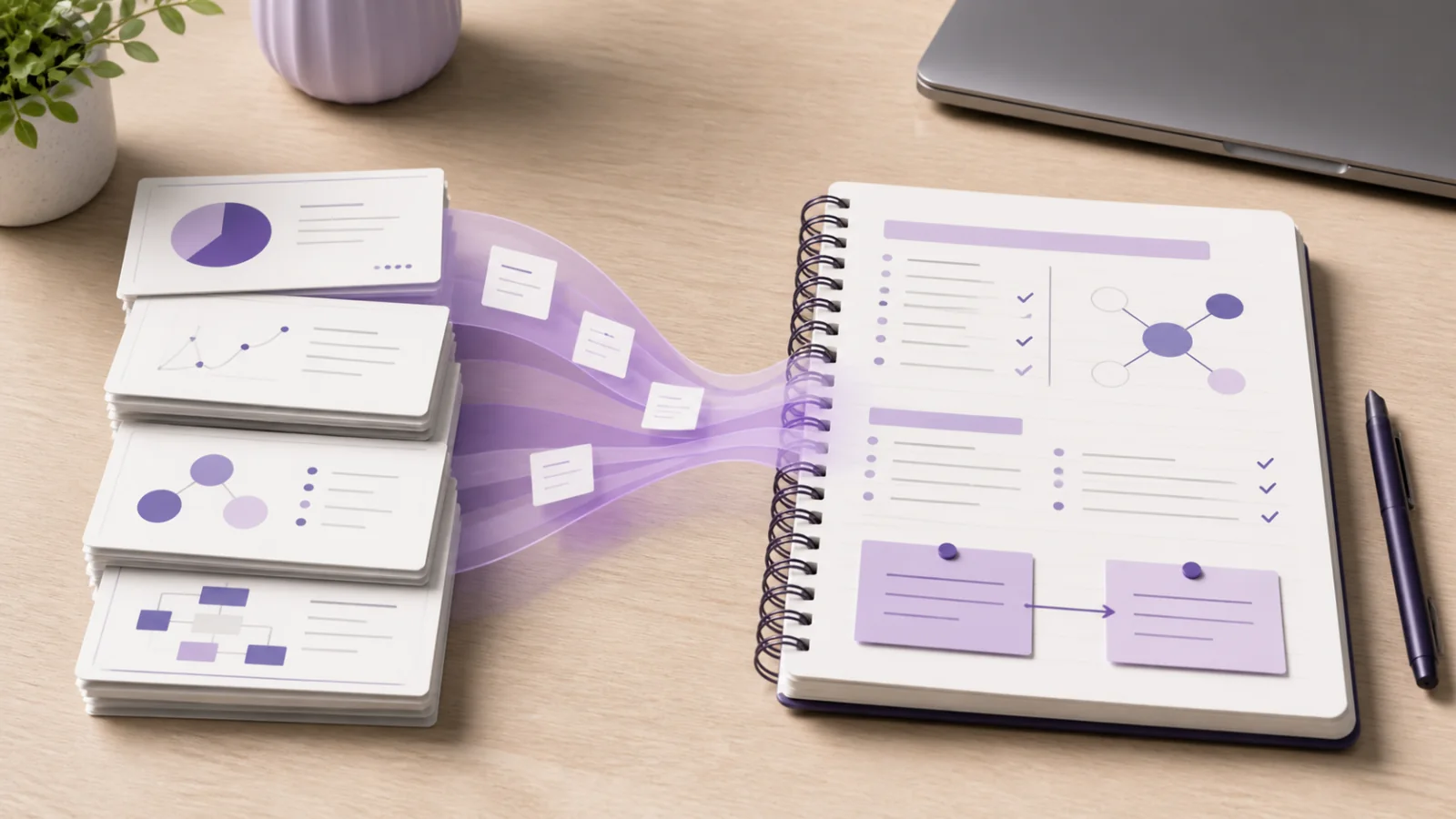
How to Turn PowerPoint Slides Into Useful Notes
Turn a PowerPoint deck into clear study notes without copying every slide, losing speaker context, or trusting an unchecked AI summary.

4 Best Coconote Alternatives for Students
Compare four Coconote alternatives for connected study notes, flashcards, spaced repetition, and source-grounded research, with honest best-fit advice.

5 Best NotebookLM Alternatives for Students
Compare five NotebookLM alternatives for active recall, connected notes, live web research, local files, and academic literature reviews.

How to Create a Shared Study Folder for Group Work
Create a shared study folder with a clear structure, named owners, sensible access, and a clean handoff for classmates or project teammates.
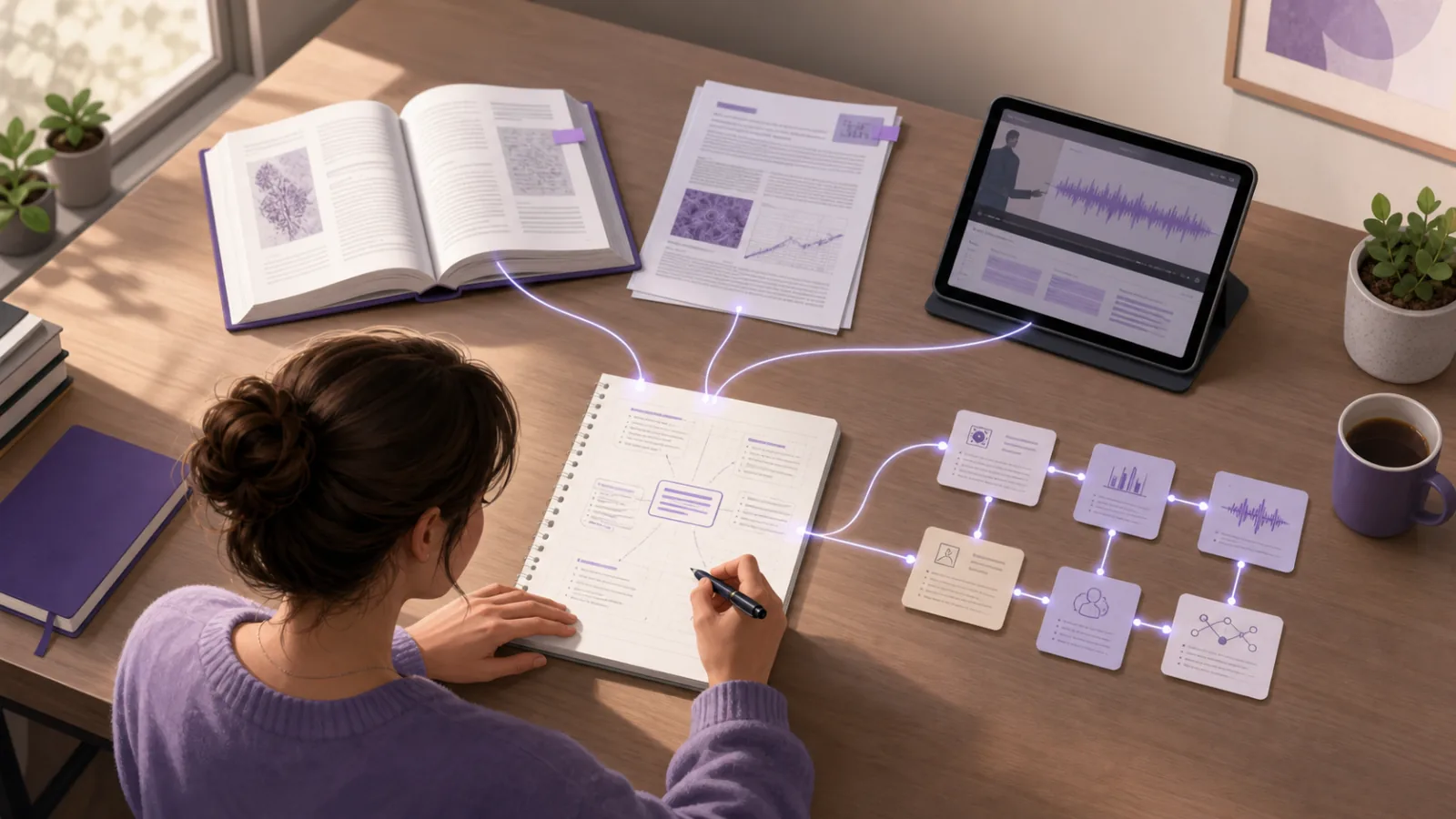
How to Take Notes From Multiple Sources
Learn how to take notes from books, lectures, articles, and PDFs without losing citations, duplicating ideas, or flattening useful disagreements.
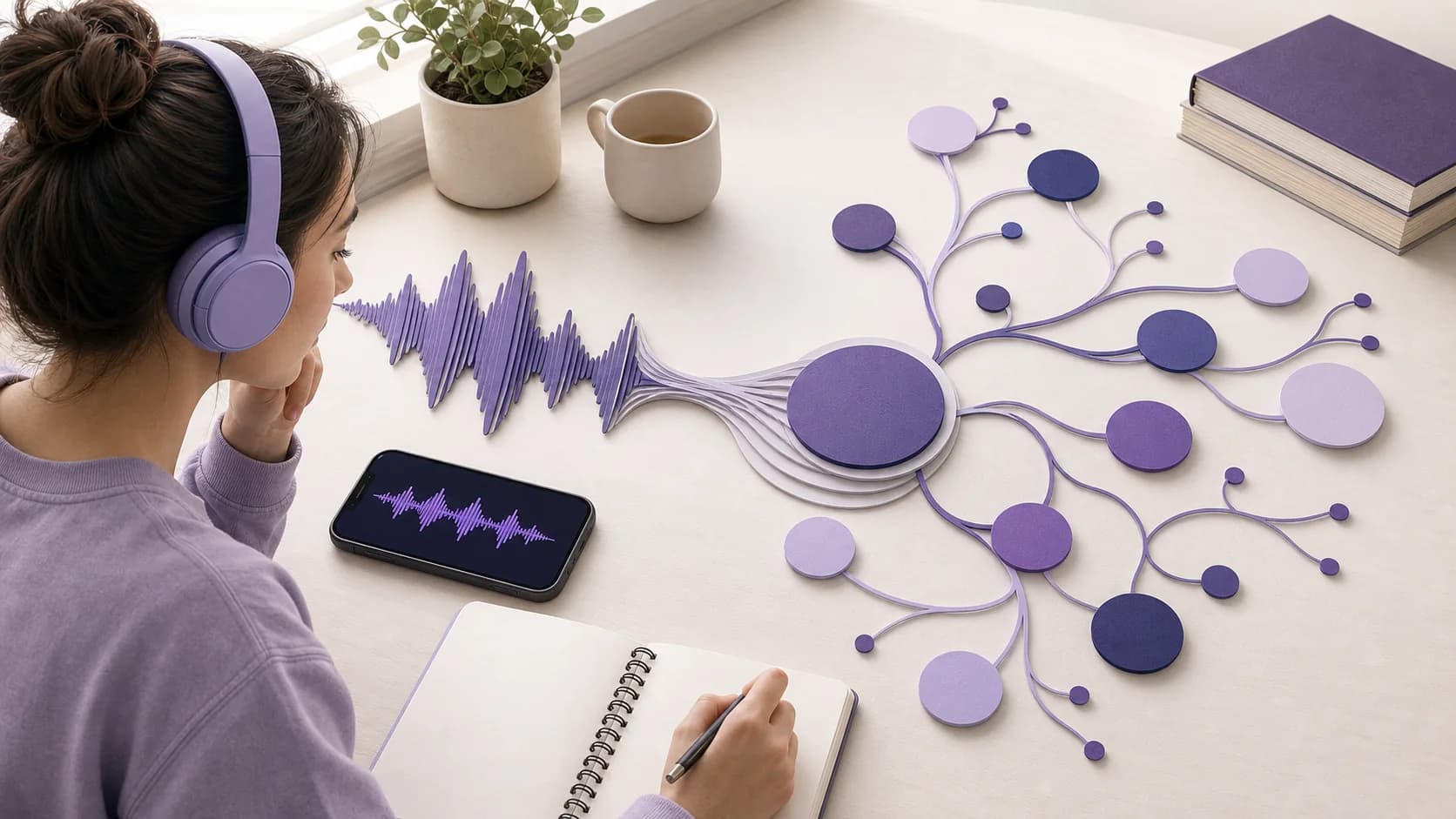
Audio to Mind Map: A Practical Student Guide
Turn a lecture, voice note, or other permitted recording into a checked mind map with clear branches, useful relationships, and recall questions.

5 Best AI Note-Taking Apps With Folders and Flashcards
Compare five AI note-taking apps that organize study material in folders and turn it into flashcards, with honest best-fit guidance and current pricing.
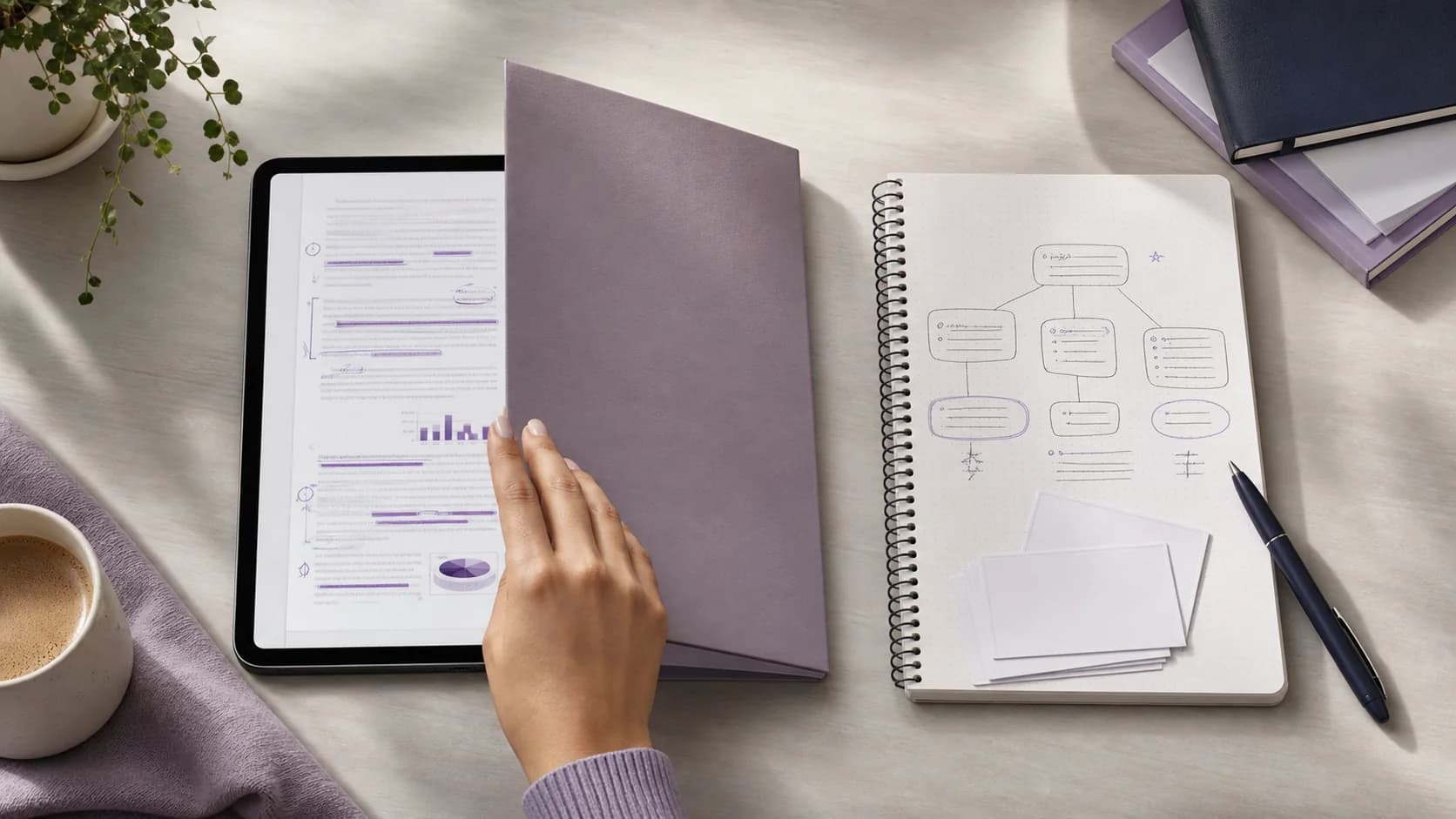
How to Study a PDF With Active Recall
Study a PDF with active recall by annotating lightly, closing the document, retrieving the ideas from memory, and checking every gap against the source.

How to Share Class Notes Without Exposing Source Material
Share class notes without exposing source material by choosing the right scope, permissions, visibility controls, and a link you can review and revoke.

A Personal Knowledge Management System for Students
Build a student PKM system that captures course sources, organizes notes, connects ideas, supports active recall, and stays useful through exam revision.
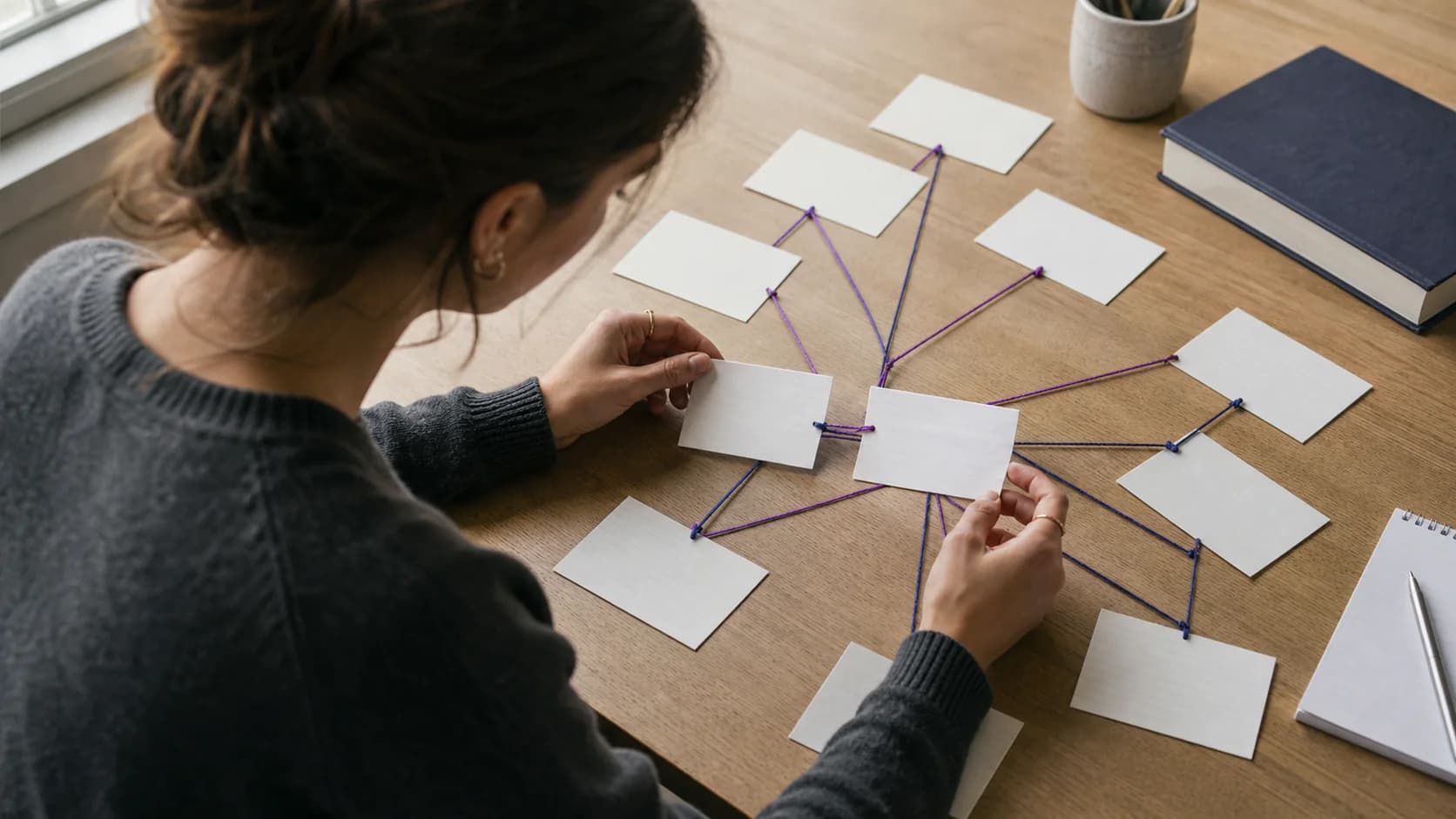
5 Best Note-Taking Apps With Backlinks for Students
Compare five note-taking apps with genuine backlinks, including how each handles course connections, study practice, mobile access, and current pricing.

5 Best Note-Taking Apps With Nested Folders
Compare five note-taking apps with genuine nested folders, including their study workflows, limitations, platforms, and current pricing.

How to Use Bidirectional Links for Studying
Use bidirectional links to connect lectures, readings, and concepts without creating a noisy note graph, then turn those connections into active revision.
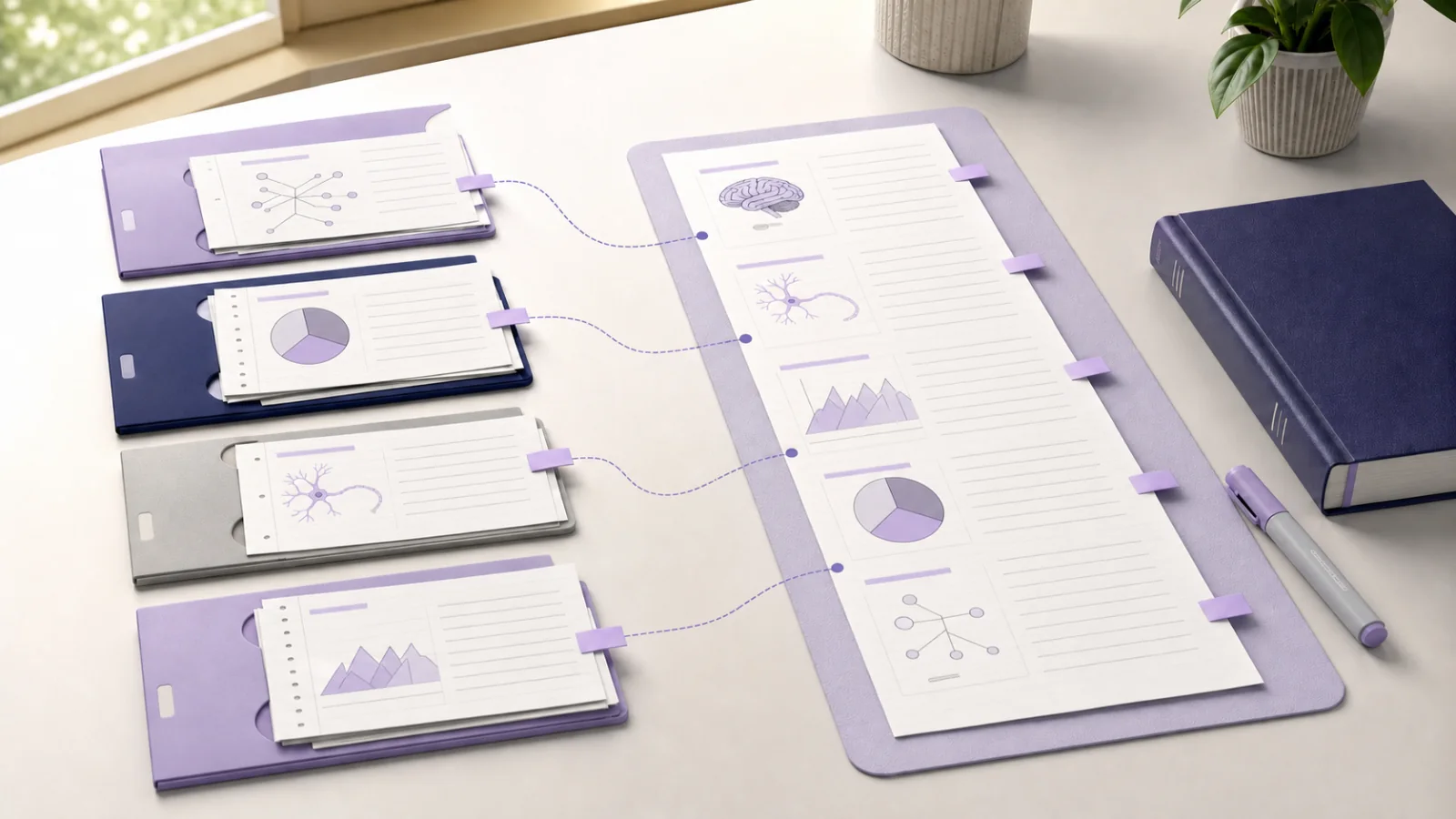
How to Combine Lecture Notes for Exam Revision
Combine lecture notes into a focused exam revision set by organizing around syllabus topics, checking sources, removing repetition, and keeping every original intact.
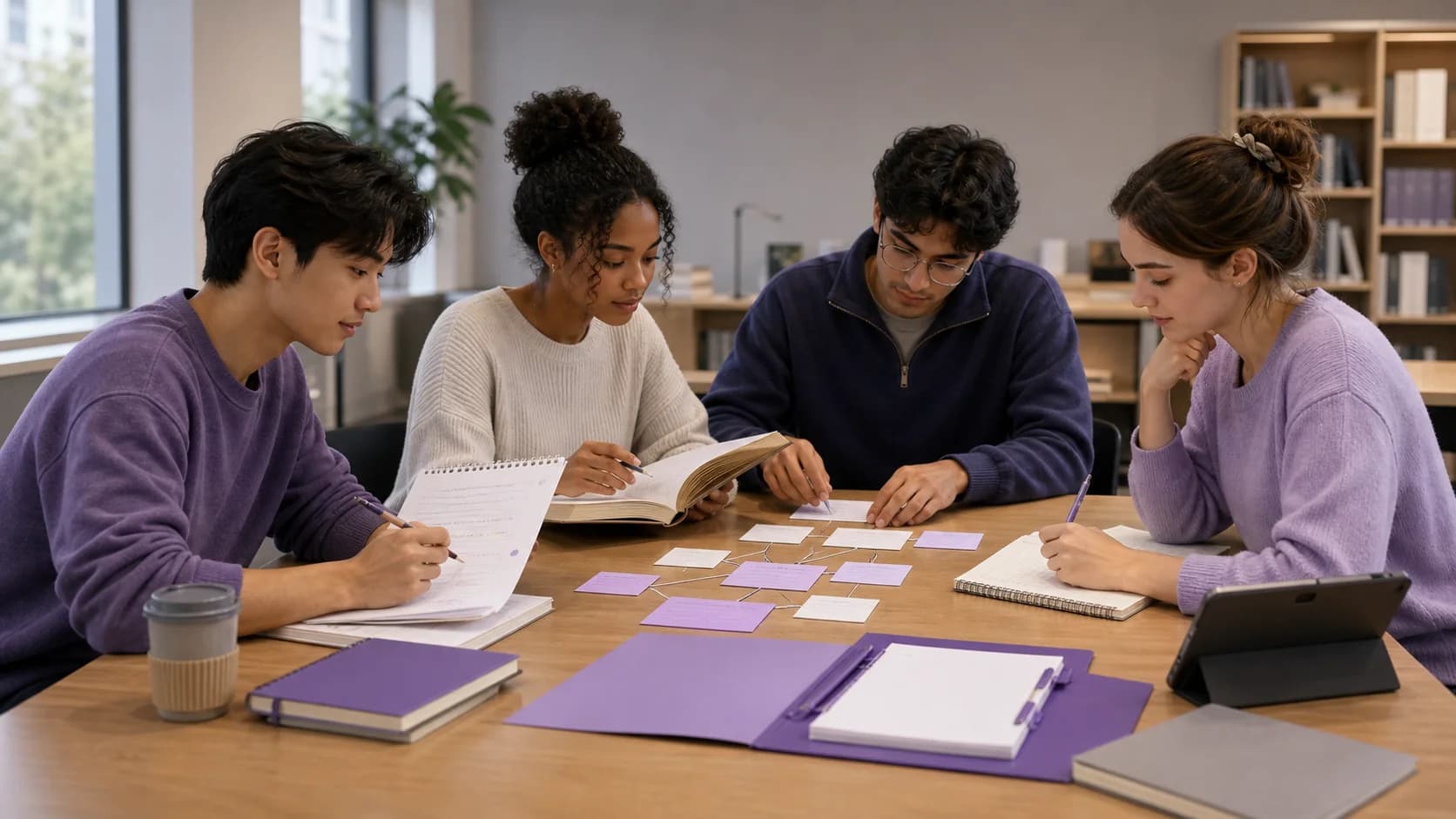
Group Study Note-Taking: A Practical Workflow
Build useful group study notes with clear roles, source checks, a clean shared version, and individual recall practice instead of one chaotic document.

How to Organize Study Notes Digitally
Build a digital study-note system with a clear course hierarchy, consistent titles, linked ideas, source checks, and a weekly revision workflow.
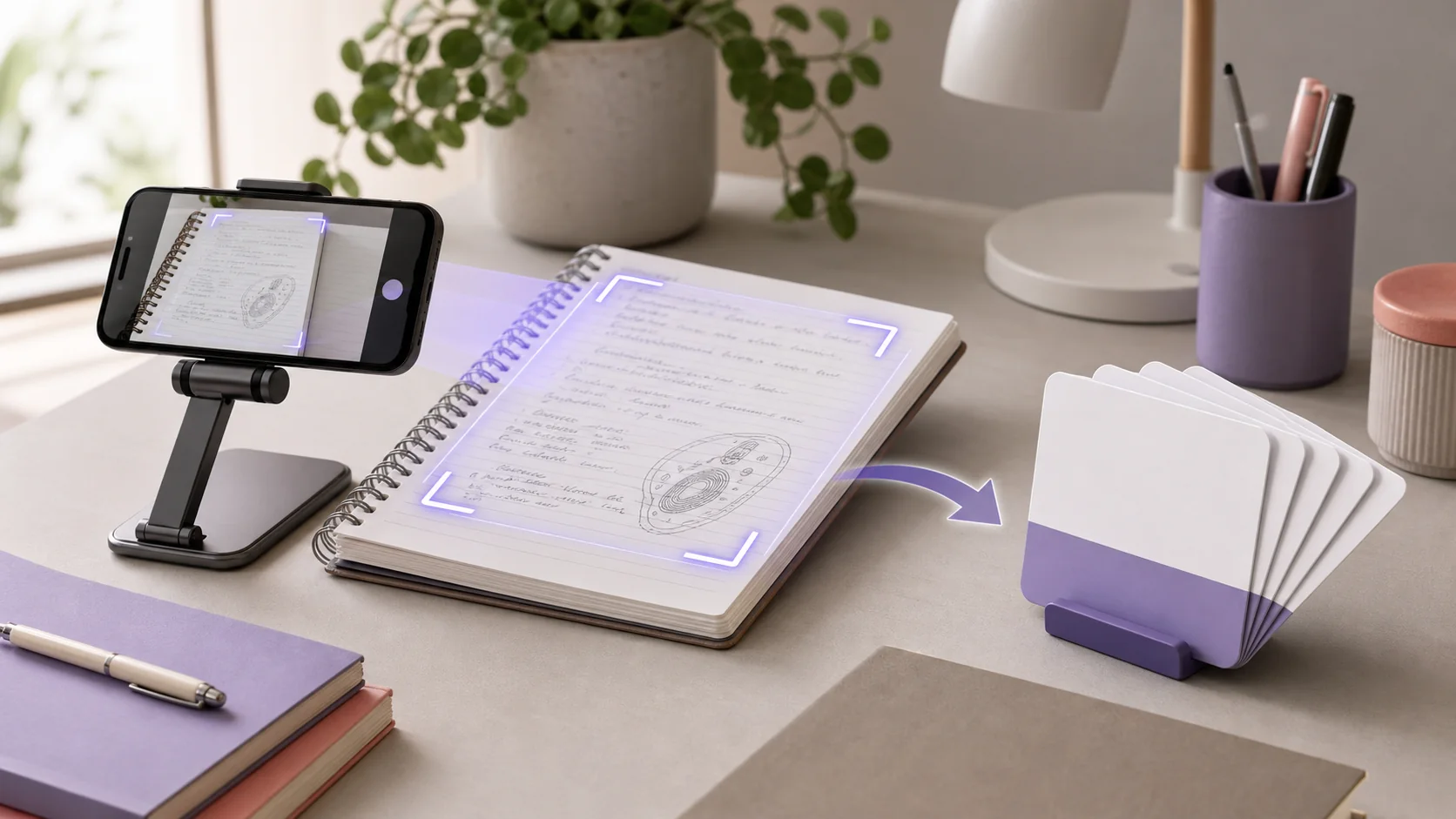
How to Make Flashcards From Handwritten Notes
Turn handwritten notes into accurate flashcards by capturing a clear photo, checking the extracted text, and editing every card against the original page.

How to Take Useful Notes From a YouTube Video
Learn a practical three-pass method for turning a YouTube video into checked notes, timestamped examples, and questions you can use for active recall.

The Mind Map Study Method: A Practical Student Guide
Use the mind map study method to organize course material, check relationships, find gaps, and turn a visual overview into active recall practice.

How to Turn a Long PDF Into Useful Flashcards
Turn a long PDF into focused flashcards by splitting the source, checking its text, generating small batches, and verifying every card before review.

How to Record Lectures and Turn Them Into Study Notes
A practical lecture note taker workflow for recording classes, converting voice to structured notes, checking accuracy, and creating flashcards and quizzes from the same material.
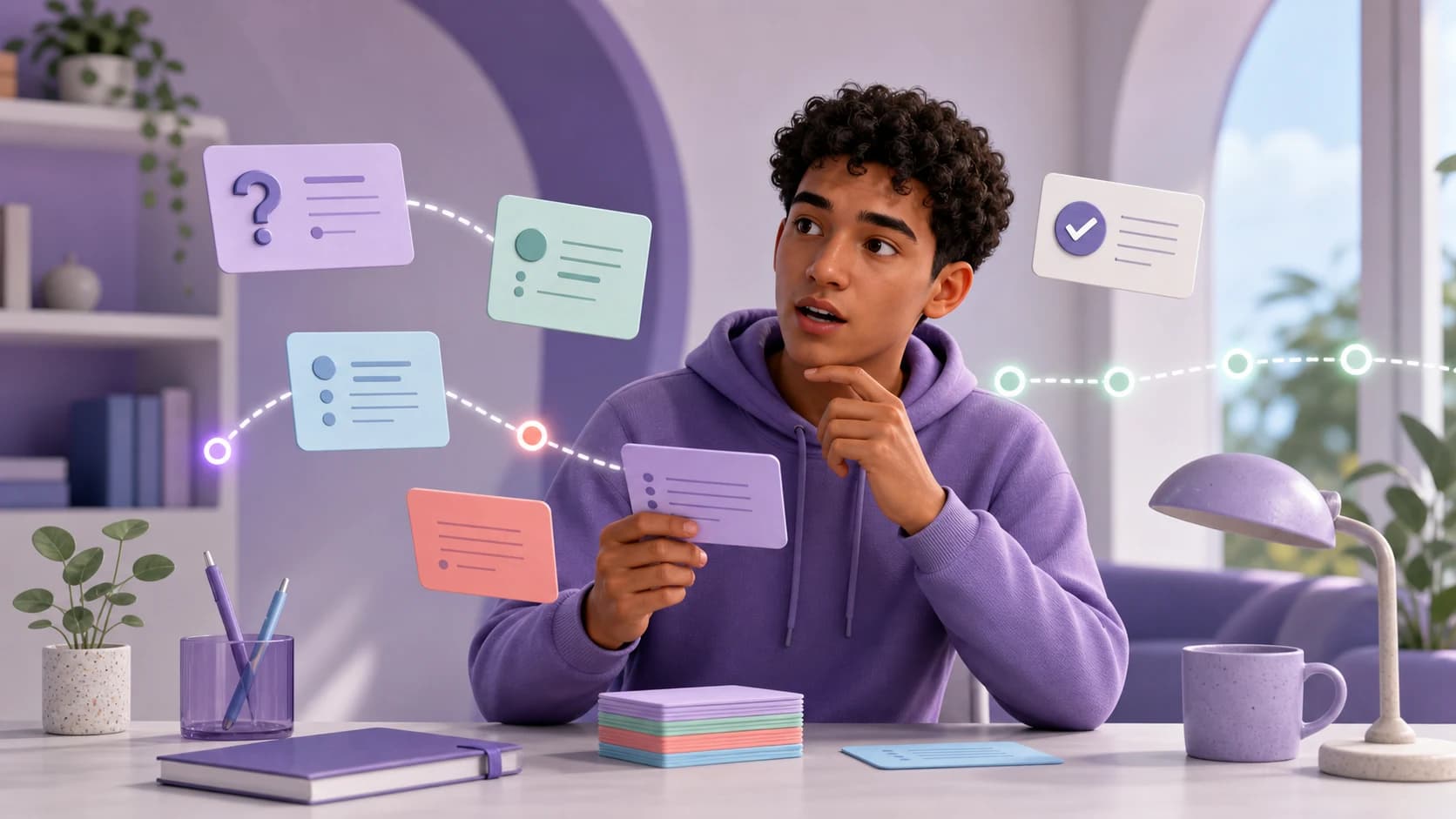
Active Recall: How to Study With Flashcards and Quizzes
Learn the active recall study method and turn your own notes into focused flashcards, quizzes, spaced review, and explanations that reveal what you actually understand.
Put the guide into practice.
Create your first note from a lecture, PDF, video, photo, or text. No card required.