
Start with a coherent passage
Use text about one topic or learning objective so the flashcards test related ideas instead of mixing unrelated material into one review set.
Pasted text can contain several definitions, relationships, examples, and exceptions inside one paragraph. Add one focused passage to BrainDen, check the structured note for missing context, and use its flashcards to test one decision at a time while the fuller explanation remains connected.
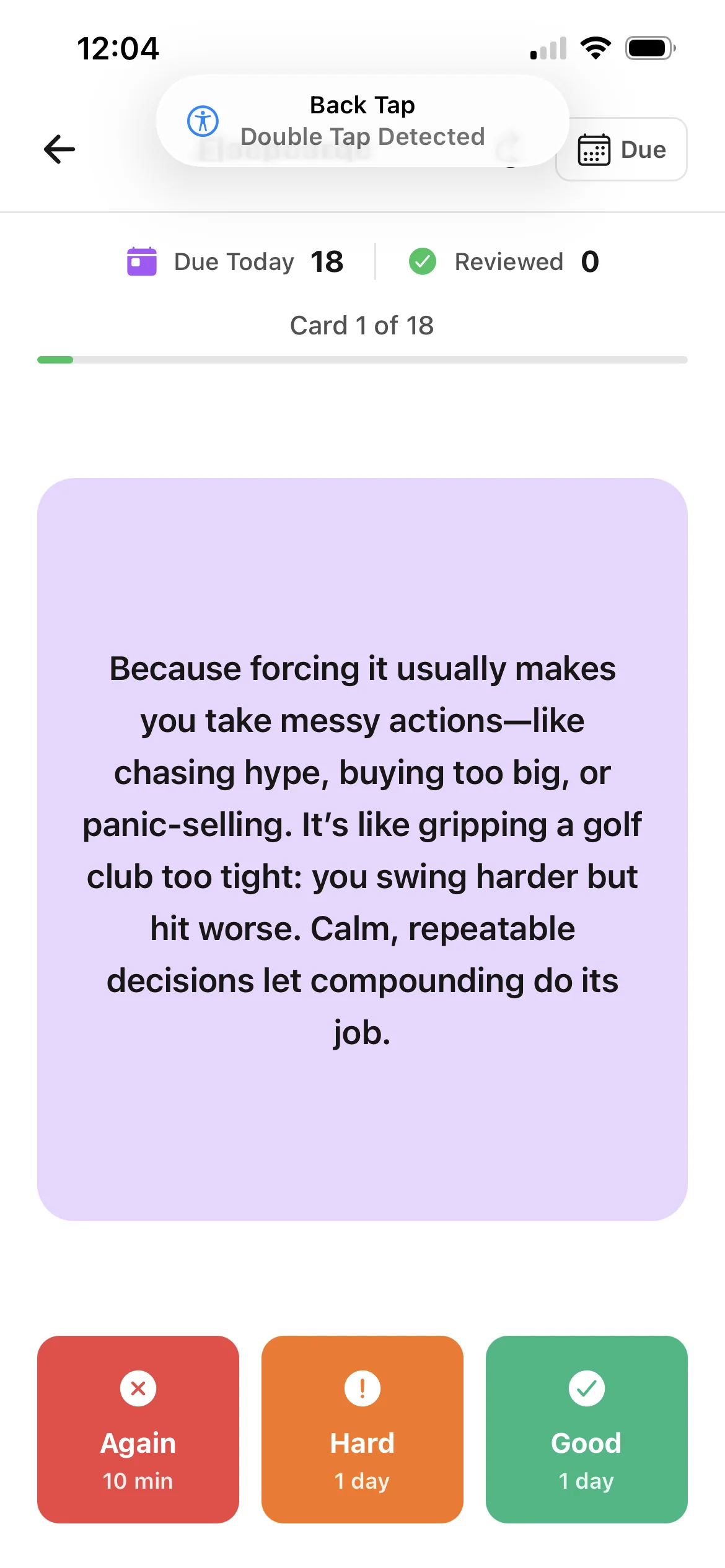
Use text about one topic or learning objective so the flashcards test related ideas instead of mixing unrelated material into one review set.
A short card can test recall, while the structured note preserves the reasoning, evidence, example, and exception needed to understand the answer.
Place the note in its module folder and link it to the lecture, reading, or prerequisite topic that gives the pasted text its course context.
Workflow fit
From source to active study
Choose a passage with a clear objective, add headings when they clarify the structure, and remove unrelated text that would create noisy or redundant prompts.
Correct names, notation, sequence, and emphasis. Add the source or class context required to explain statements that would otherwise become misleading answers.
Attempt each flashcard before revealing it, explain difficult answers in your own words, and follow the connected note whenever a short response hides an important condition.
A concrete example
A checked tutorial summary covering offer, acceptance, consideration, intention, revocation, and two cases that distinguish an invitation to treat from an offer.
A useful result could include
Generated material is a study aid. Review important terminology, notation, and claims against your source.
Make the result better
BrainDen removes repetitive setup work. Your judgement, course context, and retrieval practice are what turn the result into learning.
Split a prompt when the answer contains several independent definitions or steps. A narrow card makes it clearer which part of the topic needs another explanation.
Include comparisons, causes, sequences, examples, and short applications when the material requires reasoning rather than only exact vocabulary.
Revisit the set later and mix it with related lecture or reading prompts. Immediate repetition mainly shows what is still available in short-term attention.
Questions and answers
Yes. Use the text creation route, review the structured note, and open its connected flashcard view after correcting important terminology and context.
Start with one coherent topic, section, or objective. Several unrelated pages make the result harder to check and produce a less focused review session.
No. The cards provide concise retrieval prompts, while the editable note keeps the fuller explanation available for understanding and verification.
Yes. File the note in nested course folders and link it to relevant lectures, readings, examples, or prerequisite topics across your BrainDen library.
Continue in your connected library
A growing study library should match the way your course is actually structured. Build folders inside folders so lectures, readings, assignments, and revision topics stay easy to find.
Explore this featureConnect related ideasFolders tell you where a note belongs. Links show how its ideas relate to the rest of what you know. Connect a concept to another lecture, reading, or course and use backlinks to find the relationship from either side.
Explore this featureKeep building your study system
Start with a focused passage, outline, or explanation you type or paste, create a connected note, and choose the study tools that help you understand and remember it.