
Ask one clear thing at a time
Split broad paragraphs into prompts for a definition, relationship, sequence, comparison, or small application so you know whether the answer is complete.
Good notes hold definitions, explanations, examples, and relationships, while a useful flashcard asks for one answer you can judge. Paste or open a coherent note in BrainDen, correct the important details, and use the connected flashcard view to practise recall without cutting the cards off from their original context.
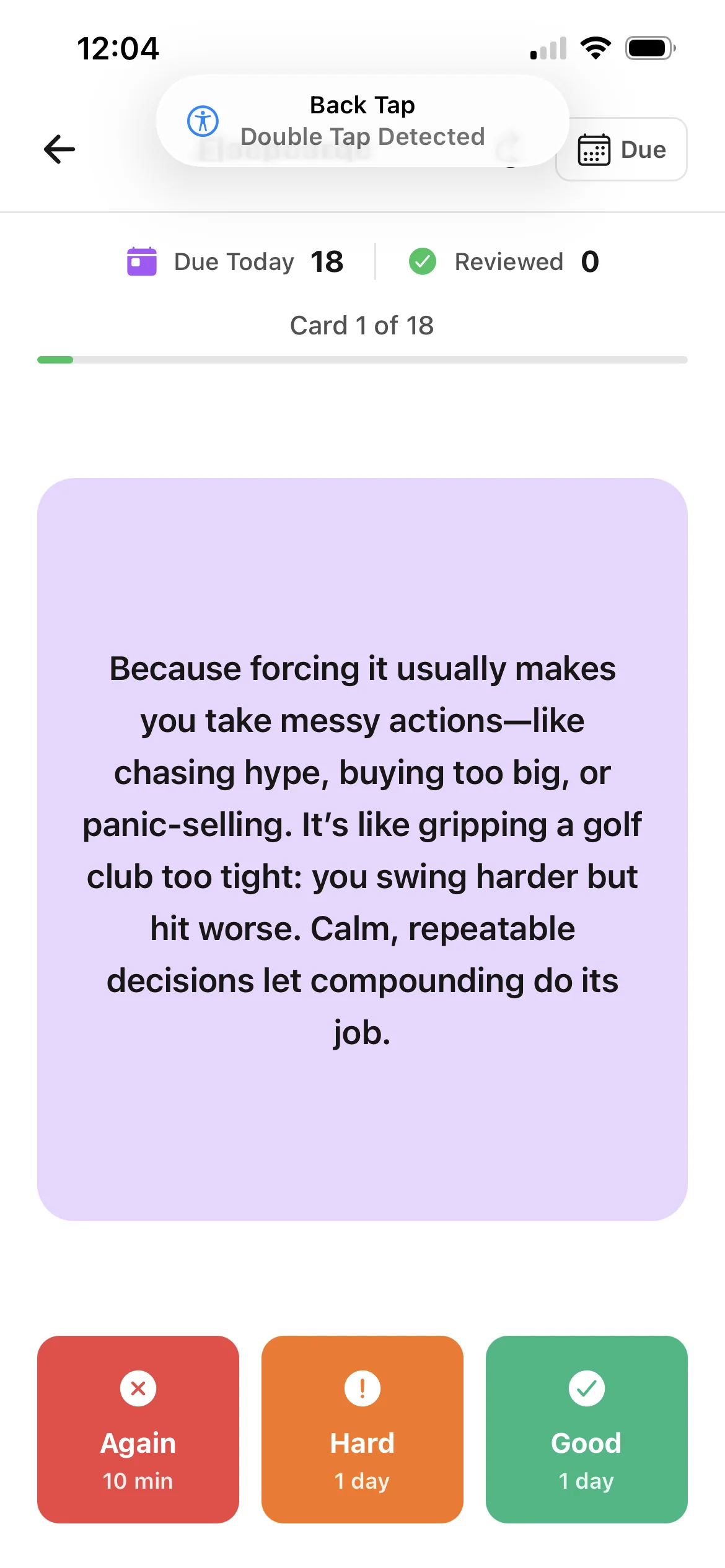
Split broad paragraphs into prompts for a definition, relationship, sequence, comparison, or small application so you know whether the answer is complete.
Return to the note and attached material when a short answer feels memorized but you cannot explain why it is correct or when it applies.
File the source note in its course folder and link it to prerequisites, readings, or worked examples instead of treating every flashcard set as an isolated deck.
Workflow fit
From source to active study
Start with one lecture, chapter, or exam objective. Correct names, dates, equations, and specialist terms before repeated practice can reinforce an error.
Turn the note's major ideas into focused prompts. Prefer questions that require you to produce an answer over cards that merely show a familiar phrase.
Commit to an answer before revealing it, return to the exact note section behind a gap, and use Explain It Back when you need to reconstruct the reasoning in your own words.
A concrete example
A checked note on accrual accounting, adjusting entries, prepaid expenses, deferred revenue, and two worked examples from a tutorial.
A useful result could include
Generated material is a study aid. Review important terminology, notation, and claims against your source.
Make the result better
BrainDen removes repetitive setup work. Your judgement, course context, and retrieval practice are what turn the result into learning.
Keep enough information to judge the response, then leave definitions, evidence, worked steps, and qualifications in the connected note where they are easier to understand.
Vocabulary cards help with exact terms, but include comparisons, sequences, and small scenarios when the course expects explanation or application rather than recognition.
Immediate repetition can feel easy because the note is still fresh. Return later, answer without opening the source first, and focus the next review on prompts you could not reconstruct.
Questions and answers
Yes. Paste the material through the text creation route, review the structured note, and open its connected flashcard view after correcting important details.
Start with one coherent lecture, chapter, or learning objective. Smaller, clearly named notes are easier to verify, organize, and connect into a wider exam review.
No. The cards are a study view connected to the note. Keep the fuller explanation and attached source available for context, verification, and editing.
Return to the note, identify the missing relationship or example, and use Explain It Back to teach the idea in your own words before reviewing the card again.
Continue in your connected library
A growing study library should match the way your course is actually structured. Build folders inside folders so lectures, readings, assignments, and revision topics stay easy to find.
Explore this featureConnect related ideasFolders tell you where a note belongs. Links show how its ideas relate to the rest of what you know. Connect a concept to another lecture, reading, or course and use backlinks to find the relationship from either side.
Explore this featureKeep building your study system
Start with a checked set of study notes, create a connected note, and choose the study tools that help you understand and remember it.