
Test the material you are actually learning
Use your course wording, examples, and emphasis as the starting point instead of relying on a generic question bank that may cover a different syllabus.
Notes become more useful when they make you retrieve an idea instead of simply recognize the page. Paste or open one coherent set of notes in BrainDen, correct the important details, and use the connected quiz to find the definitions, relationships, and applications that still need work.
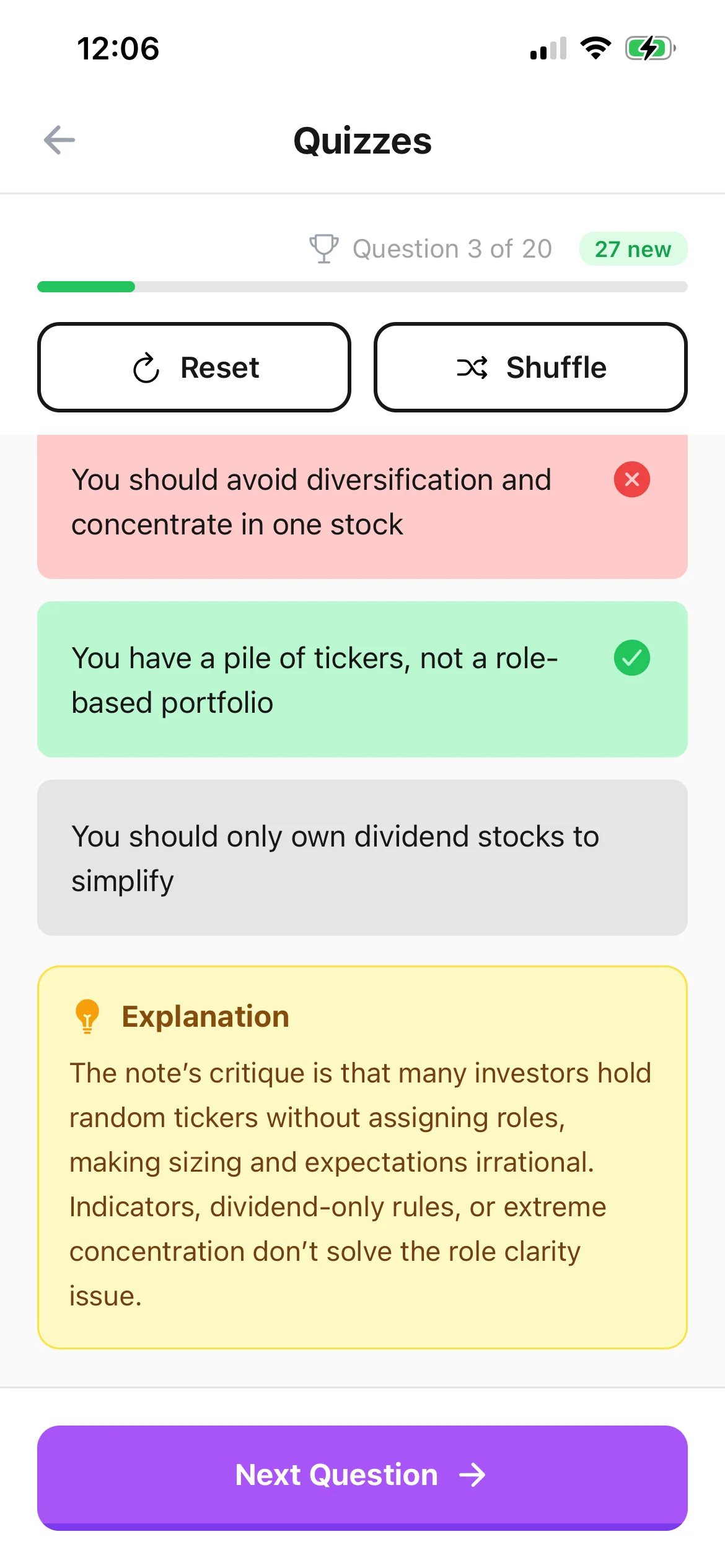
Use your course wording, examples, and emphasis as the starting point instead of relying on a generic question bank that may cover a different syllabus.
A missed question identifies a specific concept to check in the note or attached source, so the next study step is smaller than rereading everything.
File the note in its module folder and link it to prerequisite lectures, readings, or worked examples that supply the missing context.
Workflow fit
From source to active study
Choose one lecture, chapter, or exam objective. Correct names, formulas, dates, and specialist language before asking the quiz to reinforce them.
Open the quiz, put the note aside, and commit to an answer before checking feedback. Include application questions when your assessment expects you to use ideas, not only define them.
Return to the exact section or source behind a missed response, explain the correction in your own words, and try the topic again after a delay.
A concrete example
A checked note on bacterial cell walls, Gram staining, antibiotic targets, and two clinical examples discussed in class.
A useful result could include
Generated material is a study aid. Review important terminology, notation, and claims against your source.
Make the result better
BrainDen removes repetitive setup work. Your judgement, course context, and retrieval practice are what turn the result into learning.
Definitions suit vocabulary, while comparisons, calculations, and scenarios suit deeper outcomes. Use the kind of retrieval the course will actually require.
Generated or hurried notes can contain gaps. Verify high-stakes terminology, equations, quotations, and claims against the original material before repeated practice.
Reading the answer first can create false familiarity. Attempt the response, check it, then state why the correct answer works before moving on.
Questions and answers
Yes. Paste the notes through the text creation route, review the structured result, and open the connected quiz after correcting important details.
Use a focused, checked note with clear concepts, relationships, and examples. One coherent lecture or objective is easier to test and repair than a whole mixed course.
For new material, inspect the structure first. During revision, try the quiz before rereading so the first attempt shows what you can retrieve unaided.
Yes. Keep each source note in the relevant nested folder and link it to related lectures or readings so every quiz remains part of a connected library.
Continue in your connected library
A growing study library should match the way your course is actually structured. Build folders inside folders so lectures, readings, assignments, and revision topics stay easy to find.
Explore this featureConnect related ideasFolders tell you where a note belongs. Links show how its ideas relate to the rest of what you know. Connect a concept to another lecture, reading, or course and use backlinks to find the relationship from either side.
Explore this featureKeep building your study system
Start with a checked set of study notes, create a connected note, and choose the study tools that help you understand and remember it.