
See hierarchy at a glance
Separate the central topic, major branches, and supporting concepts without losing the detailed note.
A linear note is useful for detail, but some topics make more sense as a network. BrainDen turns the concepts in your note into a visual map so you can inspect hierarchy, follow relationships, and decide what needs deeper explanation.
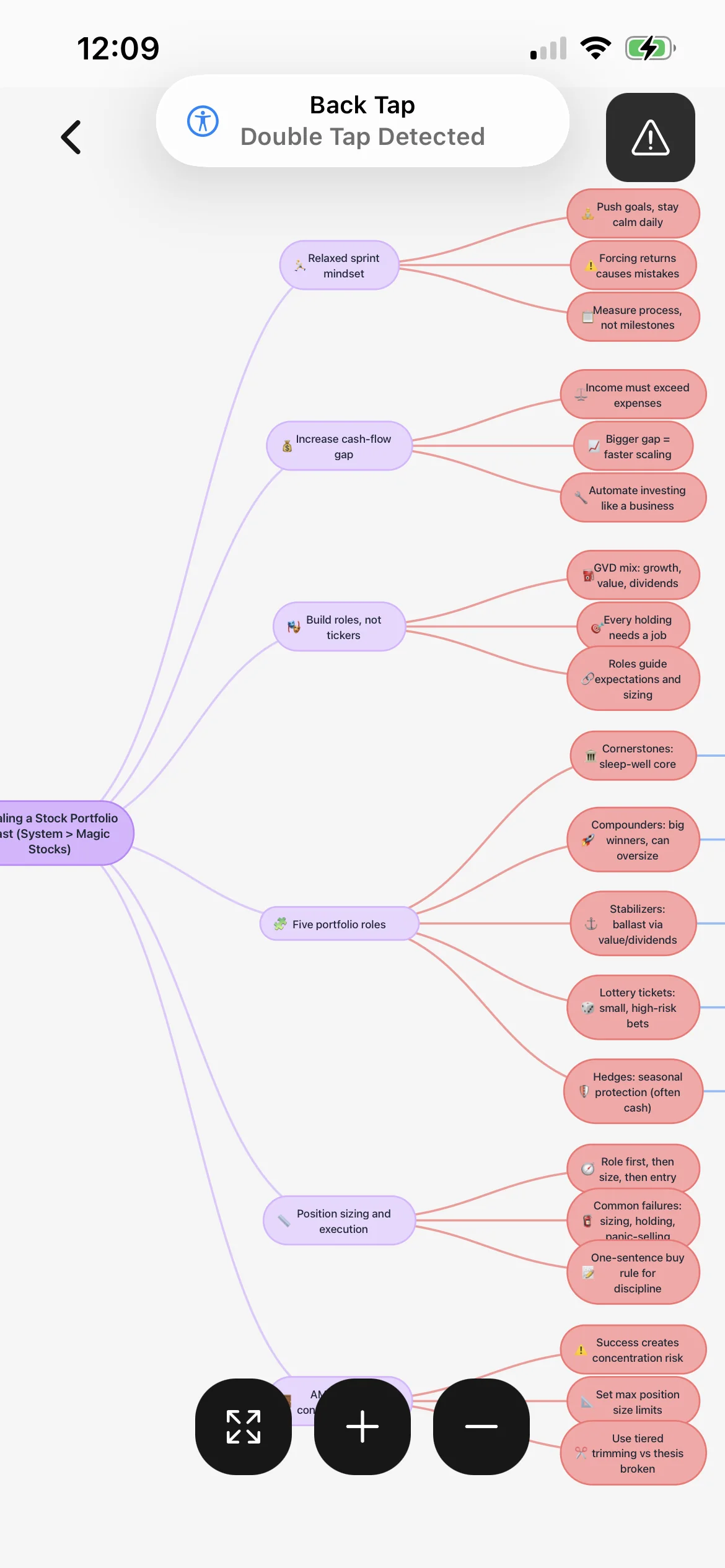
Separate the central topic, major branches, and supporting concepts without losing the detailed note.
Use the map to notice isolated ideas, unclear relationships, or branches that need another example.
Keep the mind map connected to the same note, source material, flashcards, quizzes, and recall practice.
From source to active study
Start from a lecture, PDF, video, audio file, photo, or your own text in BrainDen.
View the note's main ideas as branches and follow how supporting concepts relate to the central topic.
Hide the detailed note, choose a branch, and explain the relationship before checking the source.
A concrete example
A structured note covering innate immunity, adaptive immunity, antigen presentation, B cells, and T cells.
A useful result could include
Generated material is a study aid. Review important terminology, notation, and claims against your source.
Make the result better
BrainDen removes repetitive setup work. Your judgement, course context, and retrieval practice are what turn the result into learning.
A useful branch should express a real hierarchy, contrast, sequence, or causal connection in the topic.
The map simplifies the structure. Return to the note or source for definitions, evidence, calculations, and exceptions.
After reviewing, close the map and sketch the major branches yourself to test whether the structure is retrievable.
Questions and answers
Start with any structured BrainDen note created from a lecture, PDF, video, audio file, photo, or text.
No. It is another view of the material. The detailed note and attached sources remain available for context and verification.
Mind maps are especially useful when a topic contains categories, systems, causes, consequences, sequences, or relationships between several concepts.
Use each branch as a prompt, explain the relationship from memory, and then check the detailed note for what you missed.
Keep building your study system
Start with study notes, create a connected note, and choose the study tools that help you understand and remember it.