
Keep one accountable note per source
Record what one paper or chapter actually argues beside its attached material before moving claims into a broader thematic comparison.
Research notes need two forms of order at once: each claim must remain traceable to its source, while ideas from different readings must become comparable by theme. Use BrainDen folders for the project and its source notes, links for arguments and methods that cross papers, and selected multi-note review when you need to synthesize a focused question.
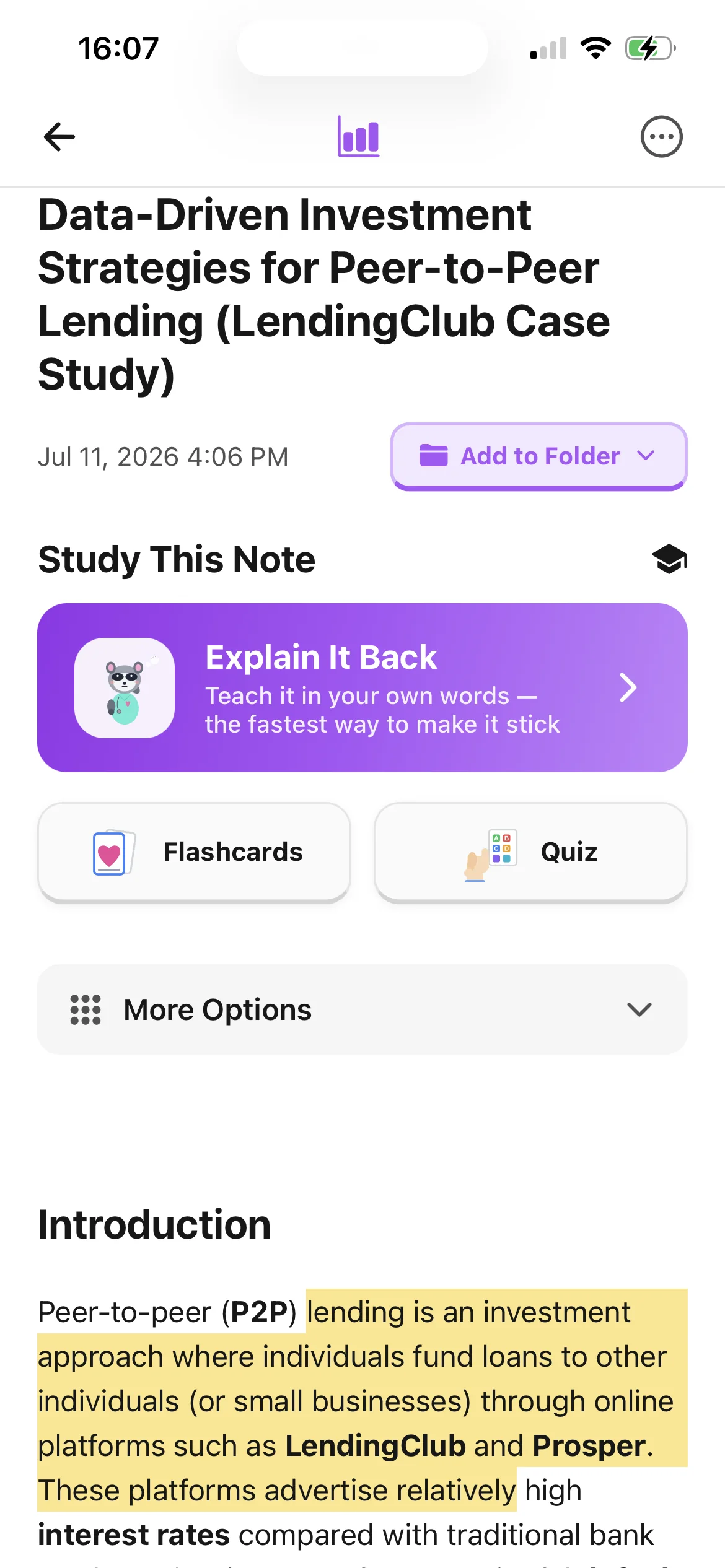
Record what one paper or chapter actually argues beside its attached material before moving claims into a broader thematic comparison.
Label quotations, paraphrases, your interpretation, and unresolved questions so later writing does not blur source evidence with personal analysis.
Link source notes to shared methods, concepts, agreements, and contradictions while the original paper remains filed once in the project library.
Workflow fit
From source to active study
Use a project folder, then group material by a stable need such as background, method, theme, or chapter. Keep citation details in your reference manager or required citation system.
Capture the research question, approach, evidence, main finding, limitation, and exact pages that matter. Add your response in a clearly separate section.
Connect papers that address the same theme or use comparable methods, then select only those notes for continuous review when drafting a synthesis or literature-review section.
A concrete example
Twelve journal articles using surveys, interviews, and learning-platform data to examine how course design affects student participation.
A useful result could include
Generated material is a study aid. Review important terminology, notation, and claims against your source.
Make the result better
BrainDen removes repetitive setup work. Your judgement, course context, and retrieval practice are what turn the result into learning.
Keep full bibliographic records and required citation formatting in the system your institution expects. Use BrainDen for connected reading, annotation, understanding, and review.
When a quotation, number, definition, or methodological detail may matter later, record where it appears and verify it against the attached PDF before relying on it.
Select sources because they answer the same comparison, theme, or methodological question. A pile of summaries is not yet a synthesis.
Questions and answers
Keep a checked note for each source, organize the project with a small folder hierarchy, and use links or thematic notes to compare ideas across sources.
No. Continue using the citation and reference system your institution requires. BrainDen helps you read, annotate, connect, and review research material.
Keep the PDF attached, record page details for important evidence, distinguish quotations from paraphrases, and link thematic notes back to the original source note.
Yes. Select the notes relevant to one question, read them continuously, and export them as one PDF or Markdown document while each original remains separate.
Continue in your connected library
A growing study library should match the way your course is actually structured. Build folders inside folders so lectures, readings, assignments, and revision topics stay easy to find.
Explore this featureConnect related ideasFolders tell you where a note belongs. Links show how its ideas relate to the rest of what you know. Connect a concept to another lecture, reading, or course and use backlinks to find the relationship from either side.
Explore this featureReview the whole topicExam topics rarely fit inside one note. Select the lectures, readings, and explanations that belong together, then review them in one continuous view without replacing or rewriting the originals.
Explore this featureKeep building your study system
Start with research articles, reading notes, and your own analytical comments, create a connected note, and choose the study tools that help you understand and remember it.