
See the chapter hierarchy
Separate the main claim from supporting mechanisms, stages, examples, and exceptions instead of treating every heading or bold term as equally important.
A textbook chapter spreads its argument across headings, definitions, figures, examples, and qualifications. Import one permitted chapter or focused PDF section into BrainDen, check the structured note against the source, and open its mind map to show the central idea and relationships without discarding the detailed evidence.
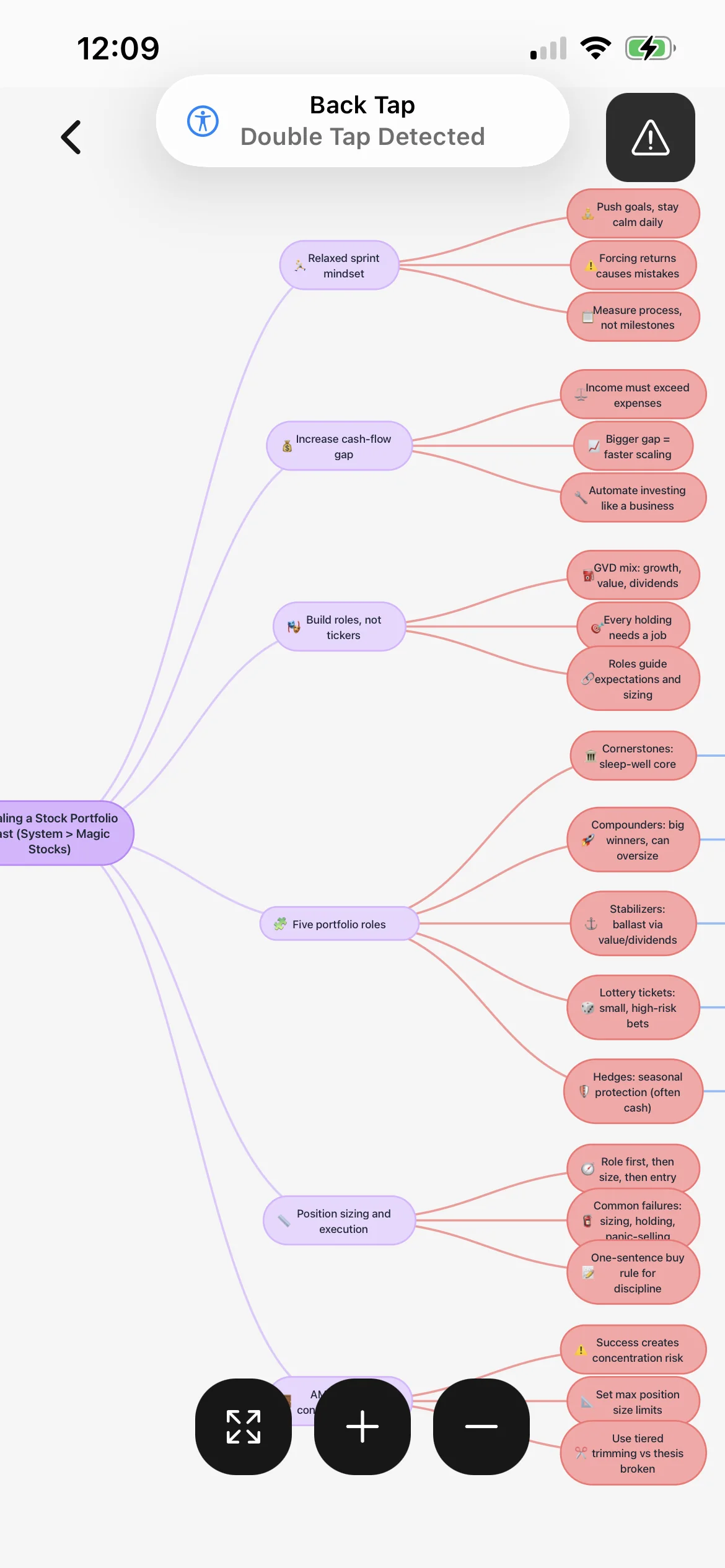
Separate the main claim from supporting mechanisms, stages, examples, and exceptions instead of treating every heading or bold term as equally important.
Use nodes for structure while the attached chapter preserves extended reasoning, figures, tables, quotations, and worked detail that should not be compressed.
File the note in its module folder and link it to the lecture, tutorial, or earlier chapter that supplies context and shows where the same idea recurs.
Workflow fit
From source to active study
Select a coherent chapter or section that serves one objective, confirm permission, and split very broad material when it contains several independent topics.
Compare headings, terminology, figures, tables, equations, and examples with the source. Make implicit causal, sequential, and contrast relationships explicit.
Follow every branch from the central topic, state why each connection belongs, and return to the chapter when a node is vague or omits a qualification.
A concrete example
A chapter comparing realism, liberalism, and constructivism through assumptions, mechanisms, historical examples, criticisms, and a summary table.
A useful result could include
Generated material is a study aid. Review important terminology, notation, and claims against your source.
Make the result better
BrainDen removes repetitive setup work. Your judgement, course context, and retrieval practice are what turn the result into learning.
A chapter may introduce an idea, add evidence later, and qualify it near the conclusion. Combine those parts under the relationship they support.
Figures, tables, equations, captions, and boxed examples may contain structure that extracted prose cannot reproduce. Verify each important relationship in the PDF.
Close the map, sketch one branch, and explain every link before checking the result. Use omissions or misplaced nodes to guide the next chapter review.
Questions and answers
Yes. Import a permitted PDF chapter, review the structured note, and open its connected mind map after checking hierarchy and terminology.
Start with one chapter or focused section. Smaller maps are easier to verify, explain, connect, and revisit during course revision.
No. The map simplifies relationships, while the connected PDF and editable note preserve detailed reasoning, evidence, figures, and qualifications.
Yes. Store it in the relevant course folder and link the note to lectures, tutorials, examples, or prerequisite topics across your BrainDen library.
Continue in your connected library
Folders tell you where a note belongs. Links show how its ideas relate to the rest of what you know. Connect a concept to another lecture, reading, or course and use backlinks to find the relationship from either side.
Explore this featureOrganize your libraryA growing study library should match the way your course is actually structured. Build folders inside folders so lectures, readings, assignments, and revision topics stay easy to find.
Explore this featureReview the whole topicExam topics rarely fit inside one note. Select the lectures, readings, and explanations that belong together, then review them in one continuous view without replacing or rewriting the originals.
Explore this featureKeep building your study system
Start with one textbook chapter or a focused PDF section, create a connected note, and choose the study tools that help you understand and remember it.